
At a Glance #
The Dog Who Never Grew Up #
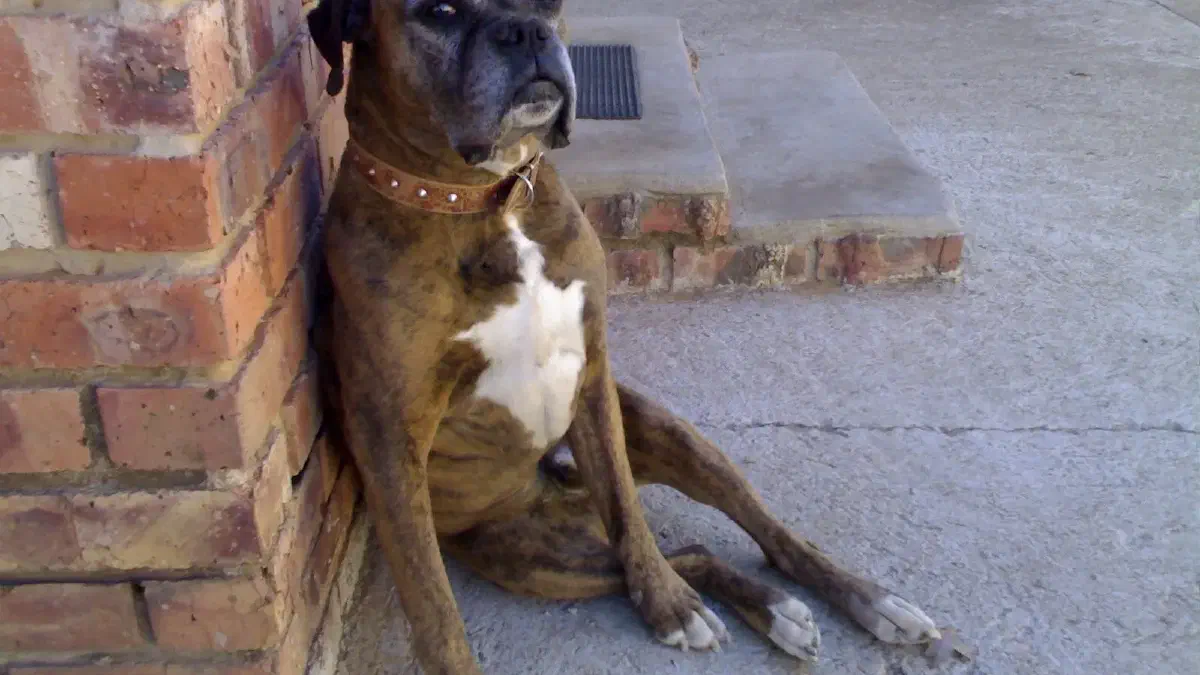
But here’s what the cute videos don’t show: that eternal puppy is a powerful athlete who needs serious daily exercise. A 70-pound Boxer with too much energy is 70 pounds of chaos. They’ll bounce off furniture, knock over lamps, and body-slam guests with affection. Boxers don’t calm down at 2 years old — they calm down at roughly never.
They’re also a breed with a heartbreaking health reality. Cancer takes far too many of them, far too young. If you’re considering a Boxer, you need to know both sides — the joy and the grief.
Temperament: The Wiggle Says It All #
Boxers don’t just wag their tails — they wag their entire bodies. The “Boxer wiggle” starts at the shoulders and goes all the way back, a full-body expression of pure happiness that’s impossible not to smile at.
Key personality traits:
- Eternal puppies. A Boxer at 8 plays the same as a Boxer at 8 months. The body gets older, the brain doesn’t get the memo.
- Kid-obsessed. Boxers genuinely adore children. They’re patient, protective, and match a child’s energy perfectly. They’ve been called “nanny dogs” for generations.
- Velcro to the extreme. A Boxer wants to be touching you. Sitting next to you isn’t close enough — they want to be on you. Personal space is not a concept they recognize.
- Protective without aggression. They’ll stand their ground and bark at threats, but a well-bred Boxer knows the difference between a stranger at the door and a friend visiting. Aggression is not typical.
- The “Boxer punch.” They use their front paws like hands — batting at toys, at you, at other dogs. The breed name may come from this habit.
With Kids: The Gold Standard #
Boxers are one of the few large breeds that truly excel with children of all ages. They’re sturdy enough to handle rough play, gentle enough not to escalate, and patient to a fault. A toddler climbing on a Boxer will be tolerated with a look that says “this is my life now.” The only danger is the enthusiastic greeting — a Boxer at full speed can accidentally flatten a small child.
With other dogs: generally good, especially when raised together. Some same-sex aggression can occur with intact males. Early socialization helps.
Health: The Hard Truth #
Boxers live 10–12 years, and far too many don’t make it that long. Cancer is the breed’s defining health crisis.
The Cancer Problem #
This breed gets cancer at alarming rates. Lymphoma, mast cell tumors, and hemangiosarcoma are the most common. A significant percentage of Boxers will develop cancer during their lifetime. There’s no way to sugarcoat this — if you get a Boxer, you’re signing up for a dog who may be taken from you far too soon.
Other Major Health Issues #
- Boxer Cardiomyopathy (ARVC) — a heart condition causing irregular heartbeat and sudden death. Affects the breed disproportionately. Screening with a 24-hour Holter monitor is recommended.
- Aortic/Subaortic Stenosis — heart defects present at birth. A responsible breeder screens breeding dogs with echocardiograms.
- Bloat (GDV) — deep-chested breeds are at risk. Feed smaller meals, no exercise after eating.
- Hip Dysplasia — less common than in other large breeds, but OFA screening is still essential.
- Brachycephalic concerns — Boxers have shortened faces. They overheat easily, can’t exercise hard in warm weather, and are terrible swimmers.
What to ask a breeder: Holter monitor results, echocardiogram clearances, OFA hips, cancer history in the pedigree (multiple generations). If the breeder can’t show these, walk away.
Exercise: They Need to MOVE #
60+ minutes of daily exercise. Not a stroll — real running, fetch, play. Boxers are sprinters with explosive energy. A tired Boxer is delightful. An under-exercised Boxer will redesign your living room with their body.
What they love:
- Fetch (obsessively — they’ll play until they collapse if you let them)
- Running alongside you
- Flirt pole (like a giant cat toy — they go nuts for it)
- Wrestling with other dogs who match their play style
Heat warning: Boxers can’t handle heat. Exercise in early morning or late evening during summer. No midday runs in temperatures above 75°F. Their short face means they can’t cool themselves efficiently.
Grooming: Surprisingly Easy #
The short coat needs weekly brushing and occasional baths. The wrinkles on the face need cleaning (wipe with a damp cloth, dry thoroughly). That’s about it. Boxers are low-maintenance in the grooming department — one of the breed’s few easy points.
They drool. Not like a Bulldog, but expect some slobber. After drinking water, a Boxer will trail water across your floor. You learn to keep towels handy.
Training: Smart, Stubborn, Sensitive #
Boxers are intelligent but not always cooperative. They learn fast but compliance depends on their mood and your approach.
What works:
- Positive reinforcement. Harsh corrections shut them down — they’re sensitive underneath the goofy exterior.
- Short, fun sessions. Boredom sets in fast.
- Consistency. A Boxer who learns that persistence pays will outlast you.
- Early socialization. Prevent same-sex aggression and help them learn appropriate play.
What you’ll struggle with:
- Jumping up. Boxers greet with their whole body. Train “four on the floor” while they’re manageable.
- Leash pulling. 70 pounds of excited Boxer can drag you. A front-clip harness is essential.
- Impulse control. “Leave it” and “wait” are survival commands.
History: From Bull-Baiting to Family Couch #
Boxers were developed in late 19th-century Germany from the now-extinct Bullenbeisser (a hunting and bull-baiting breed) crossed with the English Bulldog. The name likely comes from their habit of “boxing” with their front paws.
They were among the first police and military dogs in Germany. After WWI, returning soldiers brought Boxers to America, where the breed found its true calling: family companion. Despite their tough origins, modern Boxers are bred for temperament, not fighting.
The Bottom Line #
What’s great about Boxers:
- They’re hysterically funny. You will laugh every single day.
- Outstanding with children — one of the best large family dogs.
- Loyal and protective without being aggressive.
- Low-maintenance coat.
- Endlessly playful and affectionate.
What breaks your heart:
- Cancer rates are devastating. You may lose your Boxer young.
- They never calm down. A senior Boxer still bounces.
- Heat-sensitive. Summer requires careful management.
- Drool and slobber are part of the package.
- They’re strong, stubborn, and need a confident handler.
Frequently Asked Questions #
Are Boxers good guard dogs? They look the part — a Boxer’s muscular build and serious expression deter strangers. And they’ll protect their family if genuinely threatened. But they’re not naturally aggressive, and most Boxers would rather lick an intruder than bite one.
How much does a Boxer cost? $1,000–$2,500 from a reputable breeder who does cardiac and cancer screening. Avoid anything under $800 — cheap Boxers come from breeders who don’t test for the heart conditions that kill this breed.
Do Boxers drool? Yes. Not Bulldog levels, but after drinking or when excited about food, expect slobber. Keep towels around.
Can Boxers live in apartments? Only if you’re committed to substantial daily outdoor exercise. Their energy level makes apartment living challenging but not impossible.
When do Boxers calm down? Ha. They don’t really. Energy may dip slightly after age 5–6, but the puppy personality persists for life. If you want a calm dog, this isn’t your breed.
See also: Best Family Dogs — The Complete Guide
Similar Breeds #
| Breed | Difference |
|---|---|
| Doberman Pinscher | More intense, more protective. Full comparison → |
| Great Dane | Much larger, calmer; similar short coat and people-oriented nature |
| Rottweiler | Heavier, more protective; similar muscular build and goofy family side |
| German Shepherd | More trainable, higher work drive; similar energy level and loyalty |
| English Bulldog | Much lower energy; similar people-loving personality, more drool |
Sources #
- AKC Boxer Breed Standard — size, weight, temperament
- OFA Breed Statistics — hip dysplasia, heart conditions
- McMillan et al. (2024), Scientific Reports — breed lifespan data
- Puppy pricing based on 2025–2026 US breeder market data