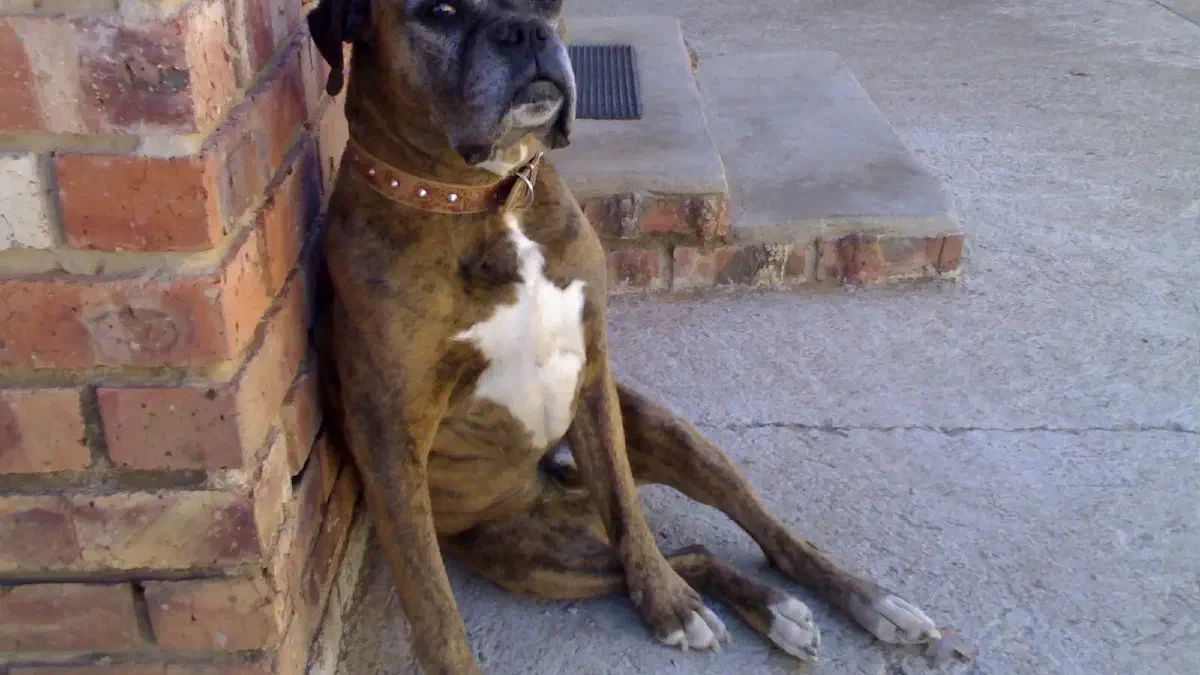

At a Glance #
| Trait | Boxer | Doberman |
|---|---|---|
| Size | 55–80 lbs | 60–100 lbs |
| Lifespan | 10–12 years | 10–12 years |
| Personality | Goofy, playful, eternal puppy | Intense, loyal, Velcro shadow |
| Energy | High — bouncy and playful | Very high — driven and focused |
| Trainability | Moderate — stubborn streak | Excellent — eager to work |
| Guard instinct | Watchdog — deterrent only | Natural guardian — ready to protect |
| With kids | Excellent — patient and playful | Good — needs supervision |
| Shedding | Moderate | Low to moderate |
| Health risks | Cancer, ARVC, bloat | DCM, vWD, bloat |
| Cost | $1,000–$2,500 | $1,500–$3,500 |
The Clown vs The Bodyguard #

Personality: Goofball vs Intensity #
Boxers are comedians. They never grow up — a 10-year-old Boxer plays exactly like a puppy. Dobermans are intense and driven, always aware of their surroundings and their person’s location. A Boxer wants to play. A Doberman wants to work.
With Kids #
Boxers are legendary with children — patient, gentle, matched in energy. Called “nanny dogs” for generations. Dobermans bond deeply but their size and intensity demand supervision around young children.
Training #
Dobermans are far easier to train (top 5 for working intelligence). Boxers are smart but negotiate compliance. Want obedience? Get the Doberman. Okay with debate? The Boxer is more fun.
Protection #
A Boxer looks intimidating — and that’s usually enough. A Doberman IS protection — they position themselves between you and threats. That protective instinct is hardwired.
Health #
Both face devastating cancer rates. Dobermans: DCM kills ~50%. Boxers: ARVC and aortic stenosis. Both at risk for bloat. Screen parents thoroughly, get pet insurance early.
Side by Side #
The table is the short version. The surprise is how different the same “muscular short-haired guardian” feels at 7 p.m. on a Tuesday.
Size. A Boxer is 55–80 pounds of square, springy muscle. A Doberman is 60–100 pounds and longer through the body, so they take more hallway even when the scale looks similar. Both will try to be lap dogs. Neither fits.
Lifespan. Both sit at 10–12 years on the breed guides, and both lose dogs younger than that to heart disease and cancer. “Average” is not a promise. It is a reason to cardiac-screen the parents and insure the puppy before anything is diagnosed. Read the health sections in the Boxer and Doberman guides before you send a deposit.
Shedding. This is the Doberman’s easy win. Short coat, low to moderate shed, a weekly rubber mitt. Boxers shed moderately and add drool when they drink or notice food. Neither needs a salon. Both need a towel. The Boxer needs it more often.
Energy. High for the Boxer, very high for the Doberman, and the texture is the real difference. A Boxer invents games and body-slams the people they love. A Doberman tracks where you are and waits for the next piece of work. A tired Boxer is still a clown. A trained Doberman can settle. A lap around the block teaches neither of them anything.
Trainability. Dobermans want the rep to be right. Boxers are smart and then open negotiations. Precision sports and a handler who likes clean work: Doberman. A house that can laugh when “down” is still a full-body wiggle: Boxer. Harsh corrections fail both. The Doberman is sensitive under the tough look. The Boxer either shuts down or gets sillier.
Health risks. This is why the cheap puppy is the expensive one. Dobermans carry dilated cardiomyopathy — the breed guide’s figure is about half the dogs — plus von Willebrand’s disease and bloat. Boxers carry ARVC, aortic stenosis, a grim cancer rate, and bloat. Skip any seller who calls heart testing optional.
Cost. Health-tested puppies: Boxers about $1,000–$2,500, Dobermans about $1,500–$3,500. The rest of the money shows up later, at the cardiologist and the oncologist.
Living With Each #
Apartment. Either dog can live in an apartment if the work happens outside and someone is home enough for a velcro breed. The indoor problem is mass and bounce, especially the Boxer, not nonstop barking. A full workday in a crate is a bad plan for both, and a worse one for the Doberman, who treats alone-time like a job they are failing. If the search that brought you here was really “apartment dog,” start at Best Apartment Dogs and leave these two off the shortlist.
Kids. Boxers are the straightforward family dog: patient, sturdy, long called nanny dogs, and fully capable of flattening a toddler with a happy greeting. Supervise the hello. Dobermans can be good with children they were raised with. They are also fast, mouthy as adolescents, and serious about who belongs. Do not add a Doberman to a house of toddlers because you wanted a guardian who is also a nanny. That reputation belongs to the Boxer, and even the Boxer needs manners around small bodies. Best Family Dogs puts the Boxer in that conversation with the intensity warning still attached.
First-time owner. A Boxer can be a first dog for someone who will exercise a clown that does not retire at two, and who will pay for cardiac screening. The first-time owner guide says that out loud and leaves the Doberman off the list. A Doberman needs an owner who already knows how to socialize a protective breed and will not “fix” sensitivity with punishment. If your experience is zero and you still want a forgiving family dog, the honest detour is Labrador vs Golden Retriever.
Active household. This is the match. Running, training, a yard, people who come home and then go do something. A Boxer turns the activity into wrestling. A Doberman turns it into work. If someone already does sport or protection, the Doberman has a job. If the house is kids plus a sense of humor, the Boxer fits. Protection shoppers should read Best Guard Dogs, German Shepherd vs Belgian Malinois, and the Malinois guide before deciding a Doberman is the default guard dog. A Boxer usually stops at looking like one.
When neither fits. You need a dog who is calm by age two, fine alone all day, cheap at the vet, or safe to jog at noon in July. Boxers overheat. A dark Doberman in full sun is not a summer sport plan. You want a protection dog and you have never trained one. You want the silhouette and the schedule of a couch ornament.
What Ownership Actually Costs #
The puppy price is a screening fee.
| Boxer | Doberman | |
|---|---|---|
| Health-tested puppy | $1,000–$2,500 | $1,500–$3,500 |
| Grooming | Towel, brush, drool management | Weekly mitt |
| The bill that shows up | Cancer care, heart workup | Annual cardiac screening, and often DCM treatment |
| Food | Large-dog portions | About $60–$100/month on the Doberman guide |
The Doberman guide stacks food, preventatives, routine care, and a heart-screening fund at roughly $100–$150 a month. A Boxer needs the same food reality plus a cancer-and-heart fund. Pet insurance before the first murmur or lump is part of the purchase. A Boxer under $800, or a Doberman sold without echocardiogram and Holter results on the parents, spends that “savings” at the cardiologist.
Which Should You Get? #
Get a Boxer if: you have kids, want daily laughter, prefer playfulness over precision. The cancer risk is real but the joy is unmatched.
Get a Doberman if: you want an intensely loyal guardian, enjoy advanced training, don’t have toddlers. You’re prepared for a dog who cannot tolerate being alone.
Get neither if: you want low-maintenance or low-energy. Neither breed is either.
Full guides: Boxer | Doberman Pinscher
Frequently Asked Questions #
Which is better with kids, a Boxer or a Doberman?
Are Dobermans easier to train than Boxers?
Which one sheds less?
Can a Boxer or Doberman live in an apartment?
Why do both breeds have heart-disease warnings?
Which is the better guard dog?
Sources #
- AKC Boxer Breed Standard | AKC Doberman Pinscher Breed Standard
- OFA Breed Statistics — hip dysplasia, heart conditions
- McMillan et al. (2024), Scientific Reports — breed lifespan data
- Puppy pricing based on 2025–2026 US breeder market data