

At a Glance #
This Is Not a Pet. This Is a Partner. #
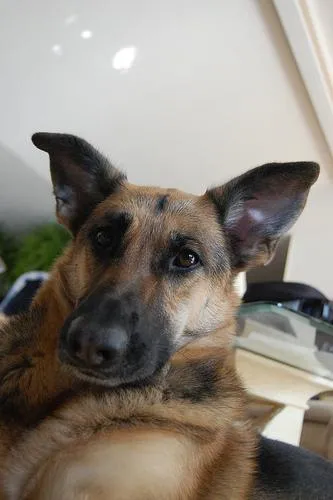
But — and this “but” is the size of the dog itself — capability needs an outlet. A German Shepherd without a job, without structure, without an owner who understands working breeds, becomes a 75-pound anxiety bomb. Shelters are full of adolescent GSDs whose owners bought them because they look cool and weren’t ready for what this breed demands.
If this is your first dog: don’t. Start with a Labrador, learn how to train and handle a large, high-energy breed, then come back to the GSD. You’ll be a better owner for it.
If you’ve done this before — if you have the confidence, the consistency, and three hours a day to exercise and train — there is no better dog on earth.
Temperament: The Dog Who’s Always Watching #
Von Stephanitz described the ideal German Shepherd as “steady of nerve, attentive, loyal, calm, confident, and courageous.” A well-bred, well-raised GSD hits every one of those notes. Here’s what that looks like in real life:
They’re aloof, not unfriendly. A GSD does not love everyone. They’re reserved with strangers — watching, assessing. This isn’t rudeness, it’s the breed’s natural suspicion working as designed. It takes time (sometimes weeks) for them to accept new people. If you want a dog who treats every stranger like a long-lost friend, get a Lab.
They’re intensely bonded. Once you’re in their inner circle, you’re family for life. A GSD orients toward their person constantly — tracking where you go, what you’re doing, how you’re feeling. They read micro-expressions. It’s flattering and occasionally unnerving.
They never fully relax. Even at rest, a German Shepherd is monitoring. Ears swivel. Eyes track. Every sound, every movement, every visitor gets inventoried. This hypervigilance is exhausting for the dog if not balanced with genuine downtime.
They’re mouthy. Herding breeds use their mouths. Puppies are land sharks — expect months of needle teeth. Adults may “hand-lead” you by gently gripping your wrist. It’s endearing when managed, a problem when it’s not.
They talk. Whining, grumbling, barking, that weird rumbly “talking” growl — German Shepherds communicate constantly. You can manage the volume, but you’ll never have a silent dog. They have opinions.
Working Lines vs. Show Lines (This Matters More Than Anything) #
| Trait | Working Lines | Show Lines |
|---|---|---|
| Build | Straighter back, more athletic | Sloped back, more angulated |
| Drive | Extreme — needs a job or unravels | Moderate to high — still needs work |
| Intensity | Always “on,” higher prey drive | Can settle better indoors |
| Trainability | Exceptional but demanding | Excellent, more forgiving |
| Best for | Sport/protection/active working homes | Active families with breed experience |
| Examples | Czech, DDR, Belgian-influenced lines | German high lines, American show lines |
The sloped back in show lines is controversial. Extreme angulation has been criticized for contributing to hip problems. Working-line dogs with straighter backs are generally healthier structurally. For a family companion, look for a moderate German show line or a lower-drive working line. American show lines tend to be the calmest.
Training & Socialization: The Two Things That Determine Your Dog #
German Shepherds rank #3 in canine working intelligence behind only Border Collies and Poodles. They learn new commands in fewer than 5 repetitions and obey ~95% of the time. This is both a gift and a trap.
The gift: You can teach a GSD almost anything. Advanced obedience, scent detection, tracking, agility, protection work — they excel at all of it.
The trap: Intelligence without direction becomes destructiveness. A bored GSD is a problem-solving GSD, and the problems they solve are usually your drywall.
What you MUST do: #
-
Be the leader. Not a tyrant — calm, consistent, fair. German Shepherds read insecurity instantly. If you’re uncertain, they’ll take charge. If they take charge, things go wrong.
-
Socialize relentlessly. From 8–16 weeks, expose your puppy to everything: people of all ages and appearances, dogs of all sizes, cats, bicycles, skateboards, umbrellas, loud noises, car rides, vet offices. This window closes fast. An under-socialized GSD becomes a reactive GSD, and a reactive 75-pound dog is dangerous.
-
Mental work is not optional. Basic obedience isn’t enough. Nose work, tracking, puzzle toys, “find it” games — your GSD needs to use their brain daily. A 15-minute scent session tires them out more than a 30-minute walk.
-
Impulse control from day one. “Place,” “wait,” “leave it,” and a rock-solid “down-stay” are survival skills.
What happens without proper training: #
An untrained German Shepherd isn’t just annoying — they’re dangerous. Natural suspicion becomes fear-aggression. Guarding instinct becomes resource guarding. Intelligence becomes neurotic obsession — shadow chasing, tail chasing, fence running. This is why shelters are full of adolescent GSDs. Not bad dogs — just smart dogs with no job and owners who weren’t ready.
Exercise: The Non-Negotiable #
60–90 minutes of vigorous daily exercise. Not a leisurely stroll around the block. Real work:
- Running, hiking, or biking alongside you
- Off-leash play in secure areas
- Structured training sessions (mental exercise burns energy too)
- A job — carry a backpack on hikes, learn scent discrimination, do anything that engages their brain
Under-exercised GSDs create their own entertainment. Drywall, door frames, couch cushions — all fair game. Worse: under-exercised GSDs develop anxiety. The pacing, the whining, the obsessive licking — your dog’s brain is eating itself from boredom.
Health: The Big Three #
German Shepherds live 9–13 years. They face significant breed-specific health problems that you need to screen for before you buy.
Common Health Problems #
| Condition | Prevalence | Notes |
|---|---|---|
| **Hip Dysplasia** | ~20% | THE defining breed health issue. OFA screening essential. |
| **Elbow Dysplasia** | ~12% | Can cause front-leg lameness |
| **Degenerative Myelopathy** | Genetic risk | Progressive paralysis; no cure. DNA test available. |
| **Bloat (GDV)** | High risk (deep chest) | Life-threatening emergency. Know the signs. |
| **Exocrine Pancreatic Insufficiency** | Breed predisposition | Inability to digest food; managed with enzymes |
| **Allergies** | Common | Environmental and food allergies |
| **Perianal Fistulas** | Breed-specific | Painful draining tracts around the anus |
| **Pannus** | Breed-specific | Immune-mediated eye condition |
The three things you MUST screen for:
- Hip dysplasia (~20% of GSDs). Buy ONLY from breeders with OFA scores of Good or Excellent on both parents. Hip replacement: $5,000–$7,000 per hip.
- Degenerative Myelopathy. Think ALS for dogs. Progressive paralysis, no treatment, no cure. DNA test identifies carriers — responsible breeders don’t breed carrier to carrier.
- Bloat (GDV). Stomach twists, blood flow cuts off, dog can die within hours. Know the signs: distended abdomen, unproductive retching, restlessness. This is a get-in-the-car-right-now emergency.
The Coat: You Will Never Stop Vacuuming #
“German Shedder” isn’t a joke — it’s a warning. This breed sheds 365 days a year with two massive blowouts that will make you question physics.
| Task | Frequency |
|---|---|
| Brushing | **Daily** (every other day minimum) |
| Bathing | Every 4–8 weeks (over-bathing strips coat oils) |
| Ear cleaning | Weekly |
| Nail trimming | Every 3–4 weeks |
| Teeth brushing | 2–3 times per week |
| Professional deshedding | Seasonally (or invest in a high-velocity dryer) |
Tools that actually work: an undercoat rake (reaches the dense undercoat), a slicker brush (guard hairs), a high-velocity dryer (blasts loose fur out before it colonizes your home). Accept that you’ll find fur in your coffee. Every day.
Diet #
2.5–4 cups of high-quality large-breed kibble daily, split into 2–3 meals. Key points:
- Joint supplements (glucosamine, chondroitin, MSM) — start in puppyhood, continue for life
- German Shepherds have notoriously touchy stomachs. Probiotics and limited-ingredient diets help.
- Bloat prevention: 2–3 small meals, no vigorous exercise one hour before or two hours after eating. Emergency vet number saved in your phone.
History: The Dog That Was Designed #
The German Shepherd didn’t evolve — it was designed. In 1899, Captain Max von Stephanitz saw a wolfish, athletic dog at a show, bought him on the spot, renamed him Horand von Grafrath, and founded the first breed club. Horand became the genetic foundation of every GSD alive today.
Von Stephanitz’s philosophy was radical for the time: “Utility and intelligence are everything. A pleasing appearance is secondary.” He didn’t care what the dog looked like — he cared what it could do. This ethos created the most versatile working dog on earth: police K9, military sentry, search-and-rescue, guide dog, explosive detection.
After WWI, returning soldiers told stories of German Shepherds dragging wounded men through no-man’s-land and standing guard over dying soldiers. A puppy rescued from a bombed kennel in France was brought to Hollywood and named Rin Tin Tin — he became a silent-film superstar and cemented the breed in the American imagination.
Did you know? The first guide dog for the blind in America was a German Shepherd named Buddy, trained in 1928.
Who Should Get a German Shepherd? #
Get a GSD if:
- You’ve owned dogs before and understand working breeds
- You’re calm, confident, and consistent — the breed reads you
- You can provide 60–90 minutes of daily exercise AND mental work — both, not either-or
- You want a partner who will notice, protect, and love your family completely
- You genuinely enjoy training — it’s a lifelong activity, not a puppy class checkbox
Do NOT get a GSD if:
- This is your first dog. Start with a Lab or Golden.
- You want low-maintenance or low-energy. This breed is neither.
- You’re away from home 8+ hours daily. They bond too deeply for that.
- You can’t handle a dog that sheds more than seems physically possible.
- You live in an apartment without a yard (possible with extreme dedication, but it’s an uphill battle)
The Bottom Line #
The good: Extraordinary intelligence — almost nothing they can’t learn. Unmatched loyalty and protective instinct. Versatile — police, military, service, search and rescue, herding. Deep emotional attunement — they read you better than most people do.
The bad: The shedding is overwhelming. 60–90 minutes of exercise daily plus mental work — no days off. A poorly bred or poorly trained GSD can become anxious, reactive, or aggressive. Significant health risks with expensive consequences. NOT a beginner’s breed.
Frequently Asked Questions #
Are German Shepherds good family dogs? Yes — IF they’re from a reputable breeder, properly socialized from puppyhood, given daily exercise and mental work, and handled by someone who understands working breeds. That’s a lot of “ifs.” A well-raised GSD is fiercely protective of children. A poorly raised one is a liability.
German Shepherd vs Belgian Malinois — which should I get? Malinois are German Shepherds turned up to 11 — faster, twitchier, more intense. They’re the military’s preferred breed for a reason. If you’re asking which is “better,” get the German Shepherd. The Malinois will eat your house and enjoy it. See our comparison guide.
How much does a GSD puppy cost? $1,500–$3,500 from a breeder who does OFA hips/elbows, DM DNA testing, and temperament evaluation. Working lines from proven pedigrees can reach $5,000+. Anything under $800 means no health testing — those “savings” become vet bills.
Why is my German Shepherd so vocal? They were bred to communicate. Whining, grumbling, barking, that weird talking growl — all normal. You can train for quiet in specific contexts, but you’ll never have a silent GSD.
How do I socialize a GSD puppy properly? Start at 8 weeks. Expose them to 100+ new people in the first month — all ages, appearances, hats, uniforms. Introduce vaccinated friendly dogs. Take them everywhere: hardware stores, outdoor cafés, parking lots. Play recordings of thunderstorms and fireworks. The goal isn’t “meet every dog” — it’s “experience the world calmly so nothing is threatening.”
Do German Shepherds bite? Any dog can bite. A GSD has 238 PSI of bite force, so poor breeding or poor socialization creates real danger. Choose a breeder who selects for stable temperament. Socialize thoroughly. A stable, well-trained GSD knows when to protect and when to stand down.
Similar Breeds #
- Belgian Malinois — more intense, higher drive, similar intelligence
- Dutch Shepherd — brindle coat, equally versatile, less common
- Doberman Pinscher — sleeker, more guard-oriented, less shedding
- Rottweiler — heavier, calmer, equally protective
- Belgian Tervuren — long coat, more sensitive, equally intelligent
- Husky vs German Shepherd — Beauty or brains — which working dog wins?
Sources #
- AKC German Shepherd Dog Breed Standard — size, weight, temperament
- OFA Breed Statistics — hip dysplasia (~19%), elbow dysplasia
- McMillan et al. (2024), Scientific Reports — breed lifespan data
- Puppy pricing based on 2025–2026 US breeder market data