
Who Is This Breed For? (Honestly) #
Let’s get this out of the way immediately: Huskies are not normal dogs. If you want a dog that comes when called, stays in the yard, and doesn’t scream at you for no reason — get a Lab. If you want an incorrigible escape artist who treats commands as optional suggestions, sheds enough fur to build a second dog every spring, and communicates exclusively through full-throated opera — welcome. You’ve found your breed.
A Husky is for you if:
- You run, bike, or hike daily and want a partner who will still have energy when you’re dead
- You find chaos entertaining rather than stressful
- You have a 6-foot fence buried 12 inches underground (and you’re still not confident)
- You think howling is hilarious, not annoying
- You already own another dog — Huskies are pack animals and do dramatically better with canine company
A Husky is NOT for you if:
- You want reliable off-leash recall. That’s not happening. Seriously. Never.
- You live in a 400-square-foot apartment and work 12-hour shifts
- You value a quiet home
- You’re a first-time dog owner who just wants an “easy” dog
- You have cats, rabbits, or other small prey animals — the prey drive is hardwired and terrifyingly fast
At a Glance #
Overview #
If you’ve ever seen a Husky throw a tantrum because you stopped petting them for three seconds, you already understand this breed better than most textbooks will tell you. These dogs are dramatic, theatrical, and absolutely convinced that everything happening in your house is about them.
The Siberian Husky was built to run. Not jog — run. All day, pulling a loaded sled across frozen tundra at 20 miles per hour, making split-second decisions about thin ice and safe passage without looking back at the musher for guidance. That independence? It’s a feature, not a bug. It’s what kept the Chukchi people alive for 3,000 years. It’s also what makes your Husky ignore you at the dog park.
Here’s the thing nobody tells you at the breeder: Huskies are not wolf-like in personality. They’re golden-retriever friendly wrapped in a wolf costume. They will greet a burglar with tail wags and demand belly rubs. They have zero guarding instinct. The UPS driver? New best friend. The neighbor’s cat? Lunch. This combination — absolute friendliness plus absolute prey drive — is what makes them both delightful and dangerous.
They’re also absurdly clean. Huskies groom themselves like cats. They rarely have that “dog smell.” A well-maintained Husky can go months between baths. But the tradeoff is the fur. Oh, the fur. When a Husky blows coat — and they do it twice a year, spectacularly — tufts of undercoat will drift across your floors like arctic tumbleweeds. You’ll find fur in places you didn’t know existed.
Temperament & Personality #
Let me describe a typical Tuesday with my Husky.
6:00 AM: The howling starts. Not barking — a full-throated, operatic arooooo that announces the sunrise with the drama of a Wagner opera. She’s not hungry. She’s not in distress. She’s just expressing herself.
7:30 AM: Morning run. Four miles. She’s pulling the entire time because pulling is what she was born to do. I’ve accepted this. I use a waist-belt and a bungee leash. She thinks we’re a sled team. I’m the sled.
3:00 PM: I’m on a Zoom call. She decides it’s time to “talk” — that weird Husky vocalization that sounds like Chewbacca trying to negotiate a hostage situation. My colleagues ask if everything’s okay. I tell them this is just my life now.
6:00 PM: Evening walk. She sees a squirrel. I no longer have a dog — I have a missile attached to my arm. The squirrel escapes because the leash exists. She stares at the tree for five minutes, making sounds I can only describe as “murderous disappointment.”
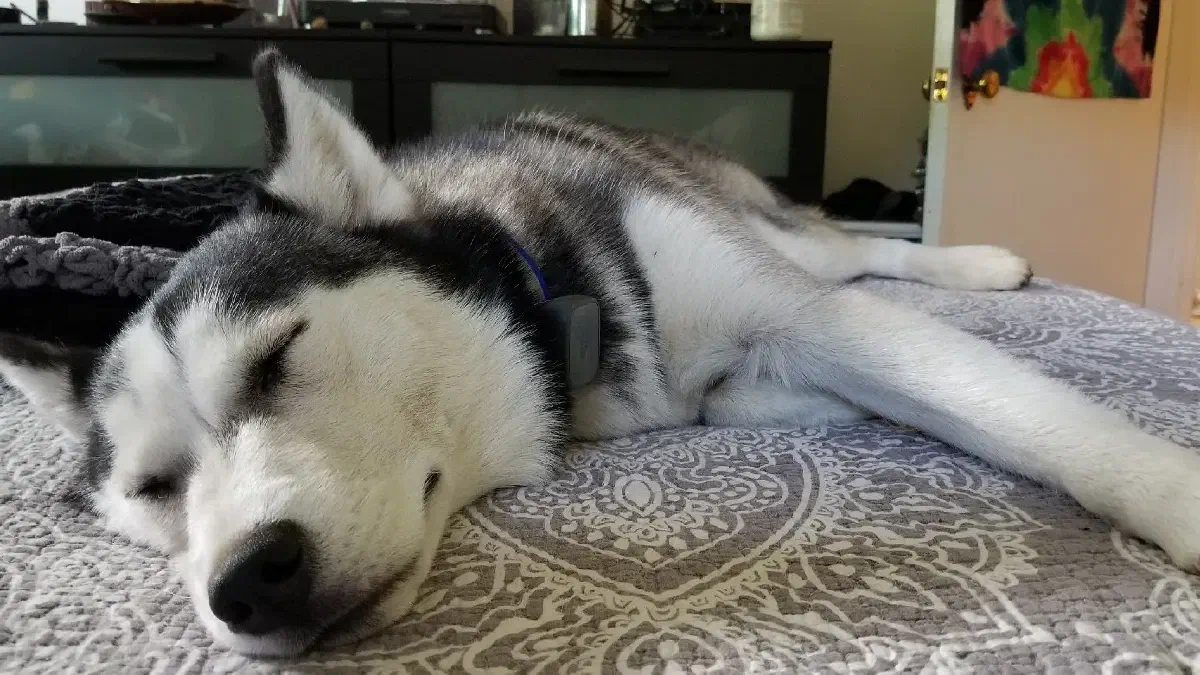
9:00 PM: She curls up on the couch, nose under tail, looking like the most angelic creature on earth. All is forgiven. This is the Husky contract.
Key personality traits you need to know about:
- Pack-driven: A lone Husky is often a miserable Husky. They thrive with another dog. Two Huskies are actually easier than one because they entertain each other. Three? Now you’re a musher.
- Zero stranger danger: These dogs were bred to welcome strange humans into Chukchi villages. That genetic friendliness means they will never protect your home. Ever. Stop hoping.
- The Husky scream: Look it up on YouTube. It’s a sound that makes people call animal control. It happens during baths, nail trims, or when you’re 30 seconds late with dinner. It is not pain. It is protest.
- Digging: Huskies dig craters. Not little holes — excavation projects. This is cooling behavior from their arctic heritage. Your garden is now a moon landing reenactment site.
- Selective hearing: A Husky can hear a cheese wrapper from three rooms away but cannot hear “come” when there’s something more interesting happening. This is not disobedience — it’s a breed trait. They were bred to override commands when their judgment said otherwise.
Kids & Other Pets #
Excellent with children. Huskies are patient, playful, and seem to understand that small humans are part of the pack. They’re sturdy enough to handle rough play and gentle enough not to snap. The only risk is knocking toddlers over during zoomies.
With other dogs: usually great, especially when raised together. Same-sex aggression can happen but isn’t common. With cats and small animals? Assume the worst. Some Huskies raised with cats from puppyhood coexist peacefully, but the prey drive is fast, silent, and instinctual. Don’t test it.
Appearance & Size #
Huskies are built for function: a compact, athletic frame that maximizes power-to-weight ratio. They’re medium-sized by weight (35–60 lbs) but carry themselves like much larger dogs.
Size #
- Males: 45–60 lbs, 21–23.5 inches
- Females: 35–50 lbs, 20–22 inches
They’re lighter than they look. A Husky’s thick coat creates the illusion of mass, but underneath they’re lean, rangy athletes. You should be able to feel ribs through the coat — a fat Husky is a tragedy.
Coat & Colors #
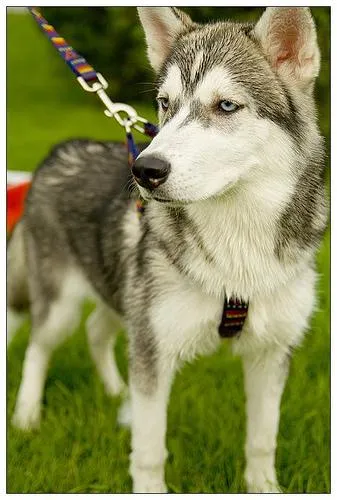
The double coat is the Husky’s superpower. The dense, wooly undercoat insulates against cold, while the longer guard hairs repel water and dirt. Coat colors include black & white, gray & white, red & white, sable, and solid white. Facial masks and spectacles (the goggles-like markings around the eyes) are breed signatures.
Critical coat rule: NEVER shave a Husky. The double coat regulates temperature in both directions — it keeps them warm in winter AND cool in summer. Shaving destroys this system permanently and exposes pink skin to sunburn. The coat may never grow back properly. If your groomer suggests shaving your Husky, find a new groomer.
Eyes #
Huskies are famous for their eyes — ice blue, deep brown, or one of each (heterochromia). Parti-colored eyes (blue and brown in the same eye) also occur. There’s no correlation between eye color and temperament, vision quality, or anything else — it’s purely cosmetic.
Health & Lifespan #
Huskies are one of the healthier purebred dogs, living 12–14 years routinely and occasionally reaching 15–16. Their genetic diversity (the breed was never subjected to extreme bottlenecking) helps. But they have specific vulnerabilities.
Common Health Problems #
| Condition | Prevalence | Notes |
|---|---|---|
| Hip Dysplasia | ~5% (low for size) | OFA screening still recommended |
| Juvenile Cataracts | ~8% | Hereditary; can appear by 6–12 months. CERF screening essential. |
| Corneal Dystrophy | Breed-specific | Cloudy spots on cornea; usually doesn't affect vision |
| Progressive Retinal Atrophy | Low | X-linked PRA in Siberian Huskies; DNA test available |
| Hypothyroidism | Moderate | Weight gain, coat issues; managed with daily medication |
| Zinc-Responsive Dermatosis | Breed-specific | Crusty skin around eyes/mouth; responds to zinc supplementation |
| Laryngeal Paralysis | Rare but serious | Noisy breathing, exercise intolerance; senior dogs most affected |
| Bloat (GDV) | Low risk | Less common than in deep-chested breeds like GSDs |
Eye Issues: The Husky’s Achilles’ Heel #
Hereditary eye problems are the breed’s biggest health concern. Juvenile cataracts can appear before the dog’s first birthday — a breeder who doesn’t provide annual CERF (Canine Eye Registration Foundation) clearances on both parents is not a breeder you should buy from. Corneal dystrophy is usually cosmetic but should be monitored. Progressive retinal atrophy (PRA) is rarer but devastating — it causes gradual blindness and has no treatment.
Care & Maintenance #
Exercise: This Is Non-Negotiable #
Huskies need 60–90+ minutes of vigorous daily exercise, and “walking around the block” absolutely does not count. They need to RUN. Ideal exercise:
- Canicross or bikejoring — you bike, they pull. It’s the closest thing to sled work and they love it obsessively.
- Running — not jogging. Running. Start with a waist-belt and bungee leash for safety.
- Hiking — they’re phenomenal trail dogs. Use a long line (30+ feet) if you want to give them freedom.
- Dog sports — agility, rally, nose work. They’re surprisingly good at scent work.
- Sledding/skijoring — if you live somewhere with snow, congratulations, you own the perfect sled dog.
The off-leash rule: Never. Not “rarely.” Not “only when nobody’s around.” NEVER. A Husky’s prey drive overrides everything. They see a squirrel three blocks away and they’re gone — running straight, not looking back, not hearing your increasingly desperate screams. They can cover miles before they realize they’re lost. Microchip your Husky. GPS collar. Do both.
A tired Husky is a non-destructive Husky. An under-exercised Husky will remodel your home — through drywall, couch cushions, door frames, and whatever you left on the counter. They don’t destroy things out of spite. They destroy things because they have 10,000 years of sled-pulling energy and nowhere to put it.
Escape-Proofing #
Huskies are Houdinis. They can:
- Dig under fences — six inches isn’t enough. Go 12–18 inches down, or install an L-footer (wire buried horizontally at the base of the fence).
- Climb over fences — four feet is a joke. Six feet minimum, and check for nearby objects they can use as launch pads (woodpiles, AC units, patio furniture).
- Squeeze through gaps — if their head fits, the body follows. Check fence gates for gaps regularly.
- Open latches — they watch you open the gate and figure it out. Use carabiners or padlocks on every gate.
- Chew through — chain link might as well be dental floss to a determined Husky.
If you have a fenced yard, walk it weekly looking for weak spots. If there’s a gap, your Husky has already found it.
Grooming #
| Task | Frequency |
|---|---|
| Brushing | 2–3 times/week normal; DAILY during blowout |
| Bathing | Every 3–4 months (they're naturally clean) |
| Ear cleaning | Weekly |
| Nail trimming | Every 3–4 weeks |
| Teeth brushing | 2–3 times per week |
Coat blowout: Twice a year, your Husky will shed its entire undercoat over the course of 2–3 weeks. This is not normal shedding. Tufts of fur will literally pull away from the body in clumps. During blowout season:
- Undercoat rake — the only tool that matters. A Furminator-type tool cuts guard hairs; use a proper rake with rotating tines.
- High-velocity dryer — blast loose undercoat out before it ends up in your house. Some self-serve dog washes have them.
- Brush outdoors — let the fur go straight into the ecosystem. Birds will use it for nesting material.
- Accept your fate — you’ll still find Husky fur in your food. It’s part of the deal.
Diet & Nutrition #
Adult Huskies eat 2–3 cups of high-quality kibble daily, split into two meals. Here’s the surprising thing: Huskies have incredibly efficient metabolisms. They were bred to run all day on minimal calories. A Husky that’s not actively working (sledding, canicross daily) needs less food than you’d think. Obesity is common in pet Huskies because owners overfeed relative to exercise.
Feeding Guidelines #
- High-quality protein as the first ingredient — they do well on fish-based formulas
- Zinc — Huskies are prone to zinc deficiency. Some dogs need supplementation; talk to your vet if you see crusty skin around the mouth or eyes
- Omega-3s — fish oil for coat and eye health
- Joint supplements — glucosamine/chondroitin starting at age 3–4
- No free-feeding — most Huskies self-regulate better than Labs, but portion control still matters
- Feed AFTER exercise — running on a full stomach increases bloat risk
Training #
Training a Husky is not like training other dogs. They are not stupid — they’re frighteningly intelligent. They just don’t care about pleasing you the way a retriever does. A Husky asks: What’s in it for me? If the answer is “nothing,” they won’t do it.
What Works #
- Short, game-like sessions — 5 minutes max. Boredom sets in fast.
- High-value rewards — freeze-dried liver, cheese, real meat. Kibble is not a treat to a Husky.
- Capture behaviors — when your Husky accidentally does something you want, reward it instantly. They learn what pays.
- Nose work — they have excellent noses and genuinely enjoy scent games. It’s one of the few training activities they’ll engage with voluntarily.
- Consistency — if you give in once, they remember for a lifetime. Huskies are master negotiators.
What Doesn’t Work #
- Repetition — if you ask for the same behavior 20 times, a Husky decides you’re an idiot and stops listening
- Harsh corrections — they’re sensitive underneath the bravado. Yelling creates an anxious, shut-down dog
- Expecting Lab-level obedience — it’s not happening. Your Husky will never heel perfectly or come every time. Adjust your expectations.
The Recall Problem #
Recall (coming when called) is the single most important and most difficult thing to train in a Husky. You can get maybe 80% reliability in controlled environments. In an open field with distractions? Maybe 20%. This is why the leash stays on.
Start recall training at 8 weeks and never stop. Use a long line (30–50 feet). Reward every single recall with something spectacular — not a treat, a jackpot. Rotisserie chicken. Steak. Whatever it takes. And still never trust it off-leash in an unsecured area.
History & Origin #
The Siberian Husky was developed by the Chukchi people of northeastern Siberia over 3,000 years — one of the oldest pure dog breeds still in existence. These weren’t pets. They were survival tools. The Chukchi relied on Huskies to pull sleds across vast frozen distances, herd reindeer, and even keep children warm at night (Huskies slept with the family in the yaranga, the traditional dwelling).
The breed’s defining moment in Western consciousness came in 1925: the Serum Run to Nome. A diphtheria outbreak threatened to wipe out Nome, Alaska. The antitoxin was in Anchorage — 674 miles away, across frozen wilderness in the dead of winter. Twenty mushers and roughly 150 sled dogs relayed the serum in just 5.5 days, through temperatures of -85°F with wind chill. The lead dog of the final leg, Balto, became a national hero (there’s a statue in Central Park). But the real hero of the run was Togo, who led his team 260 miles — the longest and most dangerous leg. Togo’s bloodline is in most modern Siberian Huskies.
The AKC recognized the breed in 1930. The Iditarod Trail Sled Dog Race, established in 1973, commemorates the Serum Run and remains the ultimate showcase of Husky endurance.
Pros & Cons #
Pros #
- Hilarious, theatrical, endlessly entertaining — life with a Husky is never boring
- Naturally clean — minimal dog odor, self-grooms like a cat
- Incredibly friendly — zero aggression toward humans (including strangers)
- Pack-oriented — thrives in multi-dog households
- Generally healthy with a 12–14 year lifespan
- Stunningly beautiful — you will get stopped constantly on walks
Cons #
- You will eat, drink, and breathe Husky fur. It’s inescapable.
- Escape artists — fencing is a lifestyle commitment, not a one-time install
- Off-leash is effectively impossible — they run and don’t look back
- Vocal in ways that will test your relationships with neighbors
- Training requires creativity, patience, and a sense of humor — they’re deliberate non-conformists
- Prey drive means small pets are always at risk
- If they’re bored, they’ll destroy things you didn’t know could be destroyed
Frequently Asked Questions #
Can a Husky actually be off-leash? Look, I’ve met people who claim their Husky has reliable recall. I’ve also met people who claim they saw Bigfoot. The breed’s prey drive and independent decision-making mean that even a “trained” Husky may bolt when a rabbit appears. If you absolutely must try, do it only in fully enclosed areas and accept that you’re gambling.
How much does a Husky cost? Expect $800–$1,800 from a reputable breeder with health testing. Show-quality dogs can reach $2,500+. Avoid anything under $600 — cheap Huskies come from backyard breeders who don’t test for eye problems.
Are Huskies good apartment dogs? Only if “apartment” means “you run them 5+ miles every single morning and take them hiking every weekend.” A bored Husky in a small space is hell for everyone involved. It’s not impossible, but it requires a level of dedication that most apartment dwellers don’t have.
Can Huskies live in hot climates? They can adapt — their double coat insulates against heat as well as cold — but they need air conditioning, unlimited water, zero midday exercise in summer, and a kiddie pool to cool off in. Phoenix in July is cruel. Seattle? Fine.
Why does my Husky scream when I bathe him? Because bathing is a violation of everything a Husky believes in. They’re naturally clean. They don’t understand why you’re subjecting them to water. The screaming is protest, not pain. Use treats, warm water, and a slip-proof mat. Or just accept the opera.
Do Huskies make good running partners? This is what they were born for. But you need the right gear: a properly fitted pulling harness (not a collar), a waist-belt with a bungee leash, and the understanding that YOU are the sled. Start slow — a Husky will run itself into heat exhaustion rather than quit. Avoid running in temperatures above 70°F.
Similar Breeds #
| Breed | Difference |
|---|---|
| German Shepherd | More trainable, more protective; similar energy level and thick coat |
| Australian Shepherd | Smaller, more biddable; similar herding energy and striking eyes |
| Border Collie | More intense work drive, more trainable; similar high energy needs |
| Great Dane | Much larger, much calmer; different energy level, similar pack orientation |
| Golden Retriever | Far more eager to please; similar friendliness, much easier for first-time owners |
| Husky vs German Shepherd | Beauty or brains — which working dog wins? |
- Shiba Inu — Much smaller (17–23 lbs), equally independent and dramatic, less social
Sources #
- AKC Siberian Husky Breed Standard — size, weight, temperament
- OFA Breed Statistics — hip dysplasia, eye conditions (cataracts, corneal dystrophy)
- McMillan et al. (2024), Scientific Reports — breed lifespan data
- Puppy pricing based on 2025–2026 US breeder market data