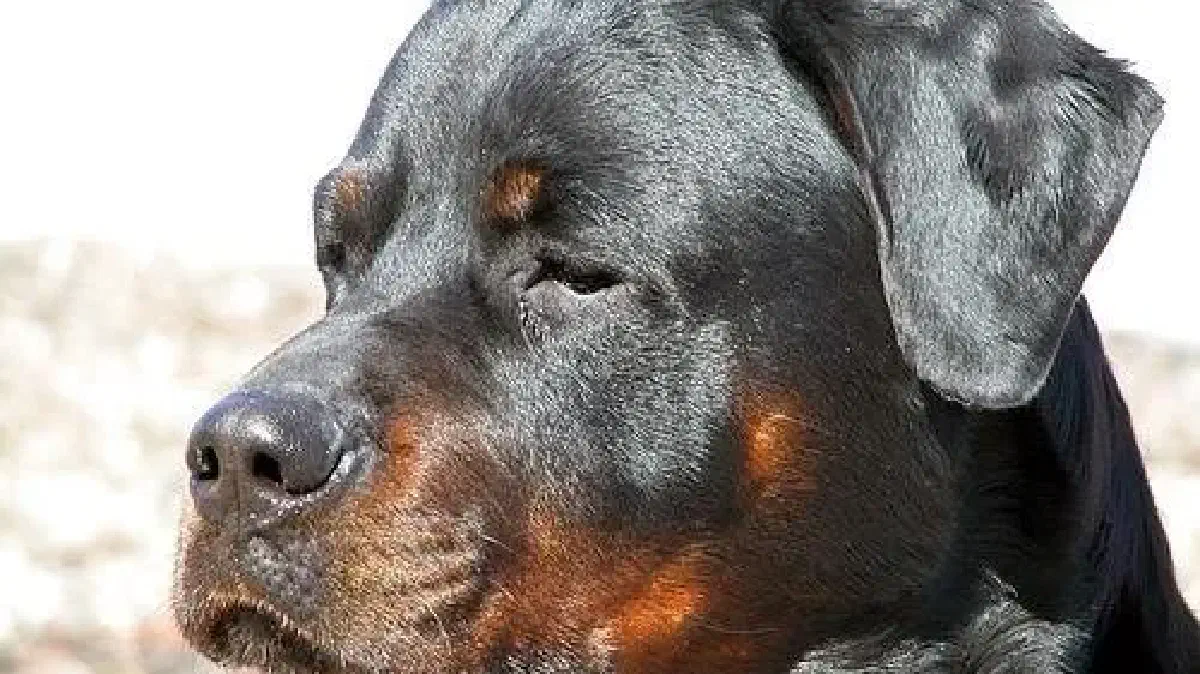

At a Glance #
History: From Roman Cattle Dogs to Modern Guardian #

The town of Rottweil, a medieval slaughterhouse hub, gave the breed its name. Butchers used Rottweilers to pull carts loaded with meat, guard money pouches tied to their collars, and drive cattle to market. These weren’t pets — they were working equipment, bred for endurance, strength, and the ability to think under pressure.
By the late 1800s, railroads replaced cattle drives and the breed nearly went extinct. A single Rottweiler was reportedly shown at a dog show in Heilbronn in 1882, and that was almost the whole population. Dedicated breeders pulled the Rottweiler back from the edge. The ADRK (Allgemeiner Deutscher Rottweiler-Klub) was founded in 1921 in Germany, establishing the breed standard that still holds today.
The AKC recognized the Rottweiler in 1931. After World War II, the breed surged in popularity as a police and military working dog. By the 1990s, Rottweilers were the second most popular breed in America — and the media frenzy around “dangerous breeds” began.
Did you know? The first Rottweiler guide dog for the visually impaired was trained in the 1920s, decades before the breed became associated with protection work.
Temperament: The Dog Who Watches Before Acting #
Rottweilers are not hyperactive. They’re not anxious. They’re not looking for a fight. A well-bred Rottweiler is a calm, confident observer — a dog who reads a room before deciding how to react. That self-assurance is what makes them exceptional guardians and what makes them dangerous in the wrong hands.
What this means day-to-day:
- They’re naturally reserved. A Rottweiler doesn’t need to be taught to be suspicious of strangers. It comes built in. Socialization doesn’t eliminate this instinct — it teaches the dog to judge correctly.
- They bond deeply. Rottweilers are one-person or one-family dogs. They follow their people room to room, lean against your legs, and make a distinctive rumbling “purr” when content. This isn’t a dog who entertains himself — he wants to be with you.
- They’re surprisingly sensitive. Harsh corrections shut Rottweilers down or make them defensive. They respond to calm, confident handling. If you’re anxious, they’ll notice. If you’re inconsistent, they’ll exploit it.
- They’re mouthy. Rottweiler puppies bite hard and often. This is normal for the breed — it’s how they explore the world and test boundaries. Consistent redirection is essential from 8 weeks old.
- They need a job. Obedience, tracking, cart-pulling, therapy work, Schutzhund — anything that engages their brain. A Rottweiler without purpose becomes destructive or neurotic.
With Children and Other Dogs #
With their own family’s children: excellent, when raised together from puppyhood. A Rottweiler raised with kids is gentle, patient, and fiercely protective. But their size and power mean supervision is non-negotiable — a happy 100-pound dog can knock a toddler over without trying.
With strangers’ children: variable. Rottweilers may not tolerate unpredictable behavior from kids they don’t know. Always supervise.
With other dogs: requires careful management. Same-sex aggression is a known breed tendency. Dog parks are risky — not because Rottweilers start fights, but because their presence and body language can provoke other dogs, and when conflict happens, the Rottweiler has the power to end it badly.
Health: Short Lifespan, Serious Concerns #
Rottweilers live 8–10 years — among the shorter lifespans for a breed their size. Cancer is the primary killer, and joint problems are pervasive. This is not a breed where you can skip health screenings.
Common Health Problems #
| Condition | Prevalence | Notes |
|---|---|---|
| **Cancer (Osteosarcoma)** | #1 cause of death | Bone cancer; early detection improves outcomes. Screen from age 6. |
| **Hip Dysplasia** | ~20% | Genetic; OFA screening of both parents essential. |
| **Elbow Dysplasia** | ~15% | Front-leg lameness; often bilateral. |
| **Bloat (GDV)** | High risk (deep chest) | Life-threatening; stomach twists. Know the signs — this is an emergency. |
| **Aortic Stenosis** | Breed predisposition | Heart murmur; cardiac screening recommended for breeding dogs. |
| **Cruciate Ligament Tears** | Common in active dogs | Knee injury; surgery costs $3,000–$6,000 per knee. |
| **Allergies / Skin Issues** | Moderate | Environmental and food allergies; hot spots common. |
The three things you MUST screen for:
- Hip and elbow dysplasia. Buy ONLY from breeders with OFA or PennHIP scores on both parents. Hip dysplasia surgery: $3,500–$7,000 per hip. Total hip replacement: $5,000–$7,000.
- Cardiac issues. Aortic stenosis is a silent killer. Breeding dogs should have cardiac clearances. Puppies should be checked at their first vet visit.
- Bloat (GDV). Deep-chested breeds are at high risk. Know the signs: distended abdomen, unproductive retching, restlessness, pacing. This is a get-in-the-car-right-now emergency — dogs can die within hours.
What helps: Buy from a breeder who does full health testing (OFA hips, elbows, heart, eyes). Keep your Rottweiler lean — extra weight stresses joints. Consider gastropexy (stomach tack) during spay/neuter to reduce bloat risk.
Grooming: Low Maintenance, High Volume #
The Rottweiler’s short, dense coat is deceptively simple. It’s easy to care for, but these dogs shed constantly — especially during spring and fall blowouts.
| Task | How Often |
|---|---|
| Brushing | 2–3 times per week (daily during blowouts) |
| Bathing | Every 4–8 weeks (over-bathing strips natural oils) |
| Ear cleaning | Weekly |
| Nail trimming | Every 3–4 weeks |
| Teeth brushing | 2–3 times per week |
| Drool cleanup | As needed (some Rotties drool heavily) |
A rubber curry brush or grooming mitt works best for the short coat. During seasonal blowouts, an undercoat rake pulls loose fur before it colonizes your couch. Rottweilers are generally clean dogs who don’t have a strong doggy odor — but they do drool, especially after drinking water.
Exercise & Training: Structure Is Everything #
Rottweilers need 60–90 minutes of daily exercise. This doesn’t mean you can throw a ball in the backyard and call it done. They need structured activity that engages both body and mind.
What works:
- Long walks or hikes — ideally with a purpose (carrying a doggy backpack, structured heeling)
- Obedience training sessions — 15–20 minutes of focused work tires them out more than 45 minutes of running
- Tracking and nose work — Rottweilers have excellent noses and love scent games
- Swimming (many Rotties enjoy it, though not all)
- Cart-pulling or weight-pulling — connects them to their working heritage
Training approach:
- Rottweilers are ranked in the top 10 for working intelligence. They learn quickly and retain well.
- They need calm, consistent leadership. Not dominance-based methods — just clear rules and fair enforcement.
- Socialization from 8–16 weeks is non-negotiable. A Rottweiler needs to meet 100+ people of all ages, appearances, and environments. This window closes fast.
- Train in public. Hardware stores, outdoor cafés, parks, parking lots. A Rottweiler who’s only experienced your backyard is a liability.
- Positive reinforcement works best. Harsh corrections create defensive, dangerous dogs.
An under-exercised Rottweiler doesn’t become hyperactive — they become destructive. Chewing, digging, pacing, and resource guarding are all symptoms of a bored, under-stimulated dog.
Diet: Fuel a Working Dog #
Adult Rottweilers need 3–5 cups of high-quality kibble daily, split into 2–3 meals. Active dogs need more. The breed tends toward obesity if overfed, and extra weight accelerates joint problems.
Key dietary needs:
- High-quality protein as the first ingredient — chicken, beef, fish, or lamb
- Joint supplements (glucosamine, chondroitin, MSM) — start early, continue for life
- Fish oil for coat health and joint inflammation
- Controlled portions — no free-feeding, ever
- Multiple small meals instead of one large meal to reduce bloat risk
- No vigorous exercise 1 hour before or 2 hours after eating (bloat prevention)
Rottweiler puppies should eat large-breed puppy food formulated for controlled growth. Growing too fast stresses developing joints. Follow your breeder’s feeding guidelines — they know their lines.
Who Should Get a Rottweiler #
Get a Rottweiler if you have experience with large, powerful breeds. You understand that leadership means calm consistency, not force. You can commit to 60–90 minutes of daily exercise and ongoing training. You want a dog who will be genuinely devoted to your family — not just friendly, but protective. You’re prepared for a shorter lifespan and the health screenings that come with it. You can handle breed discrimination from landlords, insurance companies, and nervous neighbors.
Skip the Rottweiler if this is your first dog. If you’re away from home 8+ hours daily — Rottweilers bond too deeply for that kind of isolation. If you want a dog-park social butterfly. If you can’t commit to serious socialization from puppyhood. If you’re not ready for a dog who can physically overpower you — because a poorly trained Rottweiler absolutely can.
Cost: $1,500–$3,000 from a breeder who screens for hips, elbows, heart, and eyes. Working-line dogs from proven pedigrees can reach $4,000+. Anything under $1,000 means no health testing — those “savings” become vet bills.
The Quick Summary #
What’s incredible about Rottweilers:
- Unmatched loyalty — a well-bonded Rottweiler would genuinely protect you with their life
- Calm indoors — surprisingly low-energy for their size, happy to nap at your feet
- Excellent watchdogs — they assess threats without unnecessary barking
- Versatile workers — police, military, service, therapy, search and rescue
- Affectionate with their people — the 100-pound lap dog is real
What’s hard about Rottweilers:
- Short lifespan (8–10 years) with serious health risks, especially cancer
- Power that demands responsibility — this dog can physically overpower most people
- NOT a beginner’s breed — they need experienced, confident handling
- Breed discrimination is real — landlords, insurance, public perception
- Same-sex aggression and dog-selectivity require ongoing management
- Extensive socialization is non-negotiable, and there’s no second chance at the puppy window
Frequently Asked Questions #
Are Rottweilers dangerous?
Rottweiler vs German Shepherd — which should I get?
How much does a Rottweiler puppy cost?
Can Rottweilers live in apartments?
Do Rottweilers turn on their owners?
How do I prevent bloat in my Rottweiler?
At what age does a Rottweiler calm down?
Similar Breeds #
If you love Rottweilers, also check out:
| Breed | Compared to a Rottweiler |
|---|---|
| German Shepherd | More trainable, higher energy, more shedding |
| Doberman Pinscher | Sleeker, more energetic, less shedding, similar protectiveness |
| Boxer | Goofier, similar family devotion, shorter lifespan |
| Cane Corso | Larger, equally protective, more independent |
| Belgian Malinois | Much higher energy, more intense, not for casual owners |
Sources #
- AKC Rottweiler Breed Standard — size, weight, temperament
- OFA Breed Statistics — hip dysplasia, elbow dysplasia, heart conditions
- McMillan et al. (2024), Scientific Reports — breed lifespan data
- Puppy pricing based on 2025–2026 US breeder market data