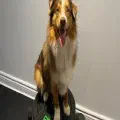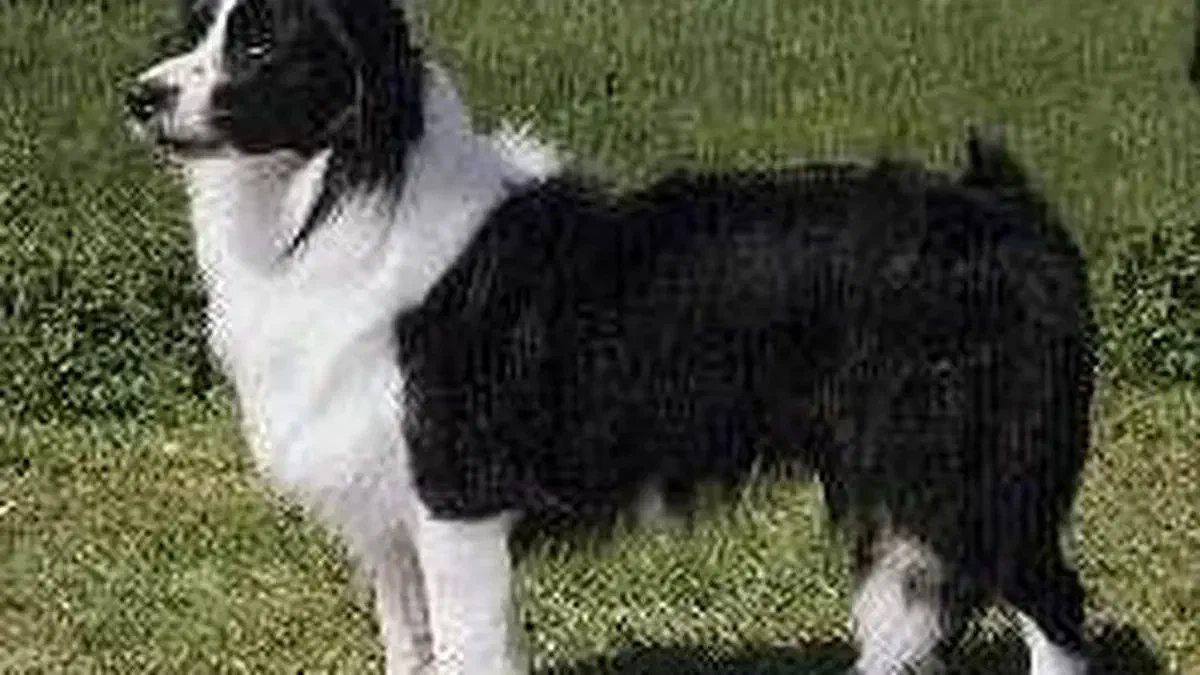

At a Glance #
| Trait | Border Collie | Australian Shepherd |
|---|---|---|
| Size | 30–55 lbs | 40–65 lbs |
| Lifespan | 12–15 years | 12–15 years |
| Intelligence | #1 — smartest breed on earth | Top 10 — extremely bright |
| Energy | Extreme — never stops | Very high — has an off-switch |
| Intensity | Obsessive — needs a job or breaks | High — manageable with exercise |
| Family fit | Experienced owners only | Active families with training |
| Shedding | Moderate to heavy | Heavy, with seasonal blows |
| Trainability | Exceptional — and they rewrite the rules | Excellent, more willing to be a pet |
| Health risks | CEA, MDR1, hips, obsessive behavior | MDR1, hips, epilepsy, CEA |
| Cost | $800–$2,000 | $800–$2,000 |
The Intelligence Gap #

The key difference is intensity. Both need 60–90 minutes of exercise. Both need mental work. But a Border Collie who doesn’t get enough develops OCD — shadow chasing, light fixation, obsessive pacing. An under-exercised Aussie gets destructive. An under-exercised Border Collie develops a mental illness.
Where They Differ #
Work Style #
Border Collies work independently at long distances, reading sheep with that hypnotic “eye.” They’re obsessive about work — they don’t want to stop. Aussies were all-purpose ranch dogs — herding, guarding, companionship. Better off-switch, more adaptable to non-working life.
Family Life #
Aussies work in active family homes with experienced owners. Border Collies generally shouldn’t be family pets unless the family IS the job — farm life, competitive dog sports, daily herding. An Aussie herds your kids. A Border Collie herds your kids, guests, other pets, and the shadows on the wall.
The Coat #
Aussies shed more — thick double coat, heavy year-round. Border Collies moderate but two coat types. Aussies need brushing 2–3x/week.
Health #
Both 12–15 years. Both share herding-breed concerns: hip dysplasia, Collie Eye Anomaly, MDR1 drug sensitivity. Aussies have higher epilepsy rates. Border Collies have more OCD-related behavioral issues.
Side by Side #
Both dogs look like the active-family poster. The difference is whether the dog can clock out.
Size. Border Collies are 30–55 pounds and look lighter than they pull. Australian Shepherds are 40–65 pounds, a bit more bone, still an athlete. Neither is a small dog with a herding costume. Both will herd anything that moves, including your kids.
Lifespan. Both are listed at 12–15 years when the hips, eyes, and MDR1 status are taken seriously. These are not short-lived breeds. They are breeds that stay intense for most of those years.
Shedding. Aussies win the vacuum contest, and you lose. Thick double coat, heavy year-round, worse in the blows. Brush two or three times a week, daily when the coat dumps. Border Collies are moderate to heavy depending on rough or smooth coat. Still a hairy house. Nobody in this matchup is low-shed. Do not shave either coat and call it summer care. The double coat is the temperature control.
Energy. The shared floor in this comparison is 60–90 minutes, and that floor is optimistic for a Border Collie. The Border Collie guide puts a real day closer to 90–120 minutes plus brain work. The Aussie guide is 60–90 of actual running or training, not a sniff walk. An under-worked Aussie gets destructive. An under-worked Border Collie fixates: shadows, lights, pacing. That is the gap. One is too much dog. The other can become a miserable dog.
Trainability. Both learn faster than you can invent lessons. Border Collies then judge your timing and start freelancing. Aussies are still brilliant and more willing to be a partner in a normal house. “Smartest breed” is a warning label. It means the dog will outsmart a bored owner by dinner.
Health risks. Collie Eye Anomaly and the MDR1 drug-sensitivity mutation sit on both family trees. Tell your vet before anyone prescribes. Hips matter in both. Aussies show more epilepsy in some lines. Border Collies add the behavioral bill: obsessive patterns when the work never comes. Buy DNA results for CEA and MDR1, and hip clearances, from people who trial or at least title their dogs. Pet-store herding dogs are a different product.
Cost. Puppies from reputable lines run about $800–$2,000 for either. Working-line Border Collies can cost less and need more. The expensive part is the life: time, sport fees if you go that way, and a yard or a car that can get the dog to work.
Living With Each #
Apartment. A poor fit for both unless the apartment is a locker between training sessions and someone is home to run the dog. Aussies are the slightly less impossible version, and most breeders will still squint at an apartment placement. Barking, herding the hallway, and a bored brain in 700 square feet is how these dogs get returned. Best Apartment Dogs is a different shopping list.
Kids. An Aussie can be a family dog for older kids in a house that already moves. They nip heels. That is herding, and it scares toddlers. A Border Collie herds the children, the guests, the cat, and the shadows. Supervise, give the dog a job that is not the children, and do not buy either breed as a nanny. Best Family Dogs says the same thing in the “do not get this” section: these are work dogs wearing a family-photo coat.
First-time owner. Neither. The first-time owner guide names both, and it is right. A first dog should forgive your timing. These dogs take notes. If you want smart and biddable without the obsessive gear, a Standard Poodle or a Lab is the honest step down. A Sheltie is still a herding dog, smaller and often barkier, not a beginner cheat code.
Active household. This is the only household that should be reading this far with a smile. Hiking, biking, agility, herding lessons, a job. An Aussie can be the family’s athlete and still sleep in the bedroom. A Border Collie wants the activity to be the point of the day, most days, for years. Weekend hiking plus weekday nothing produces the dog the shelter ads describe as “too smart.”
When neither fits. Your first dog. A sedentary house. A job that keeps you gone ten hours. A hope that the puppy will “calm down at two.” They get older. The work drive stays. If you liked the look and wanted a notch less intensity than a Border Collie, the Aussie is the answer only if the exercise is real. If you wanted a notch more than a Shepherd, read German Shepherd vs Belgian Malinois and the Malinois guide, and then probably don’t.
What Ownership Actually Costs #
The purchase prices match. The lifestyles do not.
| Border Collie | Australian Shepherd | |
|---|---|---|
| Puppy | $800–$2,000 | $800–$2,000 |
| Grooming | Brush, more during a blow | Brush 2–3 times a week, daily in shed season |
| The real cost | 90–120 minutes and a job, most days | 60–90 minutes and a brain, most days |
| Health paperwork worth paying for | CEA, MDR1, hips | MDR1, hips, eyes |
Food is a medium athletic-dog bill, not a giant-breed bill. Sports classes and herding lessons are optional only if you replace them with something equally tiring. A cheap puppy with no eye or MDR1 results is cheap because the seller skipped the tests these breeds are known for. Budget insurance if you compete or if the line has epilepsy in it. Budget a vacuum either way.
Which Should You Get? #
Get a Border Collie if: you compete in dog sports or have a working farm. You’re prepared for a dog who needs 2+ hours of intense work daily. You understand “smartest” means “most likely to outsmart you.”
Get an Aussie if: you want an active companion who can also be a family dog. You hike, run, or bike daily. You have breed experience but don’t need the #1 smartest dog on earth.
Get neither if: this is your first dog. Start with a Lab or Golden. These are expert-level breeds.
Full guides: Border Collie | Australian Shepherd
Frequently Asked Questions #
Is an Australian Shepherd easier than a Border Collie?
How much exercise does each breed need?
Which one sheds more?
Can either live in an apartment?
Are Border Collies or Aussies good with kids?
What health tests should the breeder show me?
Sources #
- AKC Border Collie Breed Standard | AKC Australian Shepherd Breed Standard
- OFA Breed Statistics — hip dysplasia, eye conditions
- McMillan et al. (2024), Scientific Reports — breed lifespan data
- Puppy pricing based on 2025–2026 US breeder market data