
At a Glance #
History #
The breed’s ancestors have worked the British Isles for centuries, but the modern Border Collie traces directly to a single dog: Old Hemp, born in 1893 in Northumberland, England. Old Hemp’s herding style — quiet, intense, using eye and body position rather than barking — became the foundation for the breed. Nearly every Border Collie alive today descends from him.
Unlike most breeds, the Border Collie was never bred for appearance. For over a century, selection was based entirely on working ability. The International Sheep Dog Society maintained an open stud book, accepting any dog that could demonstrate superior herding talent. The AKC recognized the breed in 1995 — a controversial decision among working dog enthusiasts who feared that conformation judging would compromise working ability. That tension between “show lines” and “working lines” persists today, and it matters: a Border Collie bred for the ring may look correct but lack the instinct and drive of one bred on the trial field.
The result of this working-first heritage is a dog that is, by virtually every measure of canine cognition, the most intelligent breed in the world. But intelligence without purpose is not a gift — it’s a liability.
Temperament #
The Border Collie is intense, sensitive, and utterly devoted to work. This is not a casual pet. Border Collies form deep bonds with their owners and are happiest when engaged in a task — any task — alongside their human. They read body language with uncanny precision and can anticipate commands before they’re spoken.
Their intelligence is legendary. Border Collies can learn over 1,000 words, understand abstract concepts like categorization, and solve complex multi-step problems. Chaser, a Border Collie from South Carolina, famously learned the names of over 1,022 toys and could retrieve them by name. This is not an outlier — it’s a reflection of the breed’s cognitive capacity.
That intelligence comes with emotional sensitivity. Border Collies are acutely aware of their owner’s mood, tone, and body language. They respond poorly to harsh corrections, loud environments, and chaotic households. Anxiety, noise sensitivity, and reactivity are common in Border Collies that lack proper socialization and mental outlets.
The herding instinct is the breed’s defining trait. The “eye” — that fixed, intense stare used to control sheep — is hardwired. Border Collies will try to herd anything that moves: children, other pets, cars, joggers. They use their bodies, their bark, and sometimes their teeth (nipping) to control movement. This is not aggression — it’s instinct — but it must be managed from puppyhood.
With other dogs, Border Collies are generally polite but can be socially awkward. They tend to prefer working or playing with structure rather than engaging in loose, unstructured dog socialization. They do best with calm, confident dog companions.
Health #
| Condition | Risk Level | Notes |
|---|---|---|
| Collie Eye Anomaly (CEA) | High (genetic) | DNA test available; ranges from mild to vision-threatening |
| Hip Dysplasia | Moderate | OFA or PennHIP screening recommended; less common than in larger breeds |
| Epilepsy | Moderate | Idiopathic epilepsy seen in certain lines; manageable with medication |
| MDR1 Drug Sensitivity | Moderate (genetic) | DNA test before medication; common in herding breeds |
| OCD / Behavioral Issues | High (environmental) | Shadow chasing, light chasing, tail spinning — caused by under-stimulation, not genetics |
Border Collies are generally healthy dogs with a lifespan of 12–15 years. Collie Eye Anomaly (CEA) is the most breed-specific concern — a genetic condition that affects the development of the eye and ranges from barely detectable to causing significant vision loss. Responsible breeders DNA test for CEA and should provide results for both parents.
The MDR1 mutation, while more commonly discussed in Australian Shepherds and Rough Collies, also affects Border Collies. Test before administering any medications, especially ivermectin-based products.
Perhaps the most important health concern for Border Collies is behavioral. OCD-like behaviors — obsessive shadow or light chasing, fixation on spinning objects, repetitive pacing — are distressingly common in under-stimulated Border Collies. These are not genetic defects; they’re the result of a brilliant mind with nothing to do. Prevention is simple: give them enough to think about. Treatment, once established, is much harder.
Grooming #
| Task | Frequency |
|---|---|
| Brushing | 2–3 times per week; daily during shedding season |
| Bathing | Every 6–8 weeks, or when dirty after outdoor work |
| Nail Trimming | Every 2–3 weeks |
| Ear Cleaning | Weekly check; clean as needed |
| Professional Grooming | Every 8–12 weeks; rough coats need more attention than smooth |
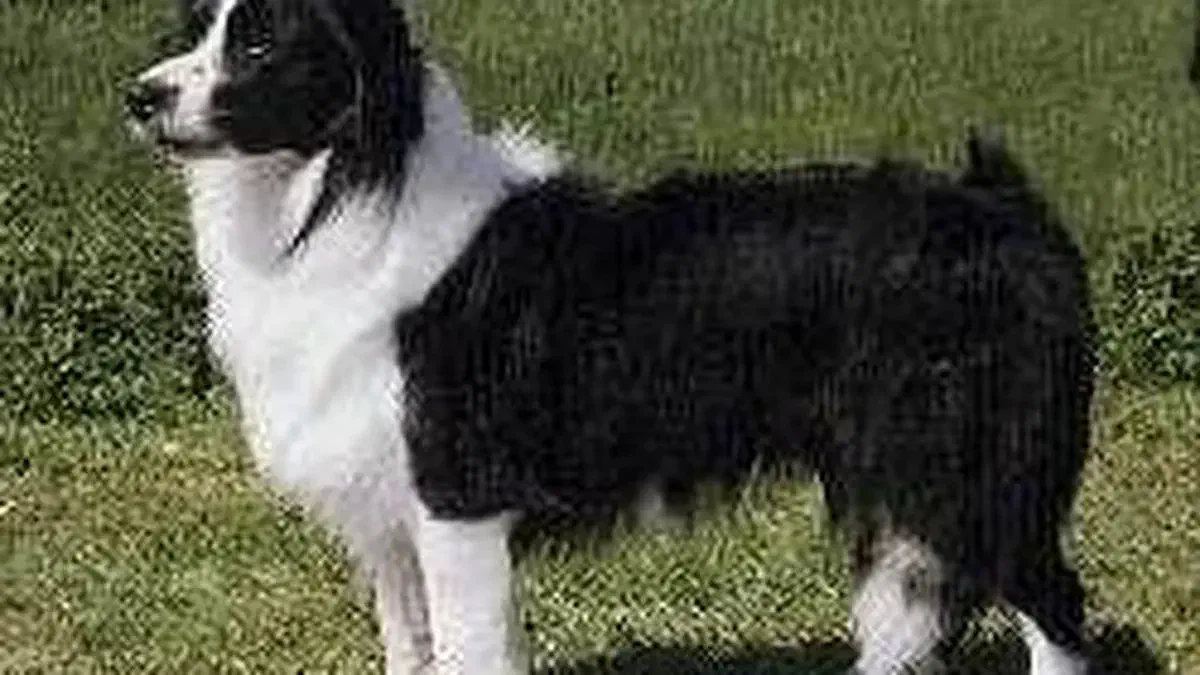
Border Collies come in two coat varieties: rough (medium-length with feathering) and smooth (shorter and flatter). Both are double coats that shed moderately year-round and heavily during seasonal changes. The rough coat requires more frequent brushing to prevent matting, particularly behind the ears and on the legs. Never shave a Border Collie — the double coat provides insulation and protection.
Exercise & Training #
Border Collies need a minimum of 90–120 minutes of vigorous exercise daily, combined with substantial mental work. This is non-negotiable. A Border Collie that is physically tired but mentally unstimulated will still find trouble. Ideal activities include:
- Herding lessons or trials — the ultimate fulfillment for a Border Collie’s purpose
- Agility — Border Collies dominate competitive agility worldwide
- Advanced obedience and trick training — they crave complex learning challenges
- Disc dog / frisbee — combines athleticism with handler bonding
- Scent work and nosework trials — engages the brain as much as the body
- Flyball — fast-paced, team-oriented, perfect for high-drive dogs
- Long hikes or trail runs — they will outlast any human runner
- Puzzle toys and enrichment feeders — essential for downtime between activities
Training a Border Collie is both effortless and challenging. They learn faster than any other breed — often understanding a new command in a single session. But their intelligence makes them independent thinkers who will test boundaries, anticipate routines, and find shortcuts you didn’t intend. Training must be engaging, varied, and fair. Boredom in training is the fastest way to lose a Border Collie’s cooperation.
Early socialization is critical. Border Collies are naturally cautious and can become fearful or reactive without proper exposure to varied environments, people, and other animals during the critical 8–16 week window. Herding instinct — the stare, the crouch, the chase, the nip — must be redirected early with structured outlets.
Diet #
Feed a high-quality, protein-rich diet formulated for active medium-sized breeds. Most adult Border Collies eat 1.5–2.5 cups of quality kibble daily, split into two meals, but working or sport dogs may need significantly more — performance diets with higher fat and protein content support sustained energy output.
Border Collies tend to be lean, efficient metabolizers. Monitor body condition regularly: you should see a visible waist from above and feel ribs easily without excess fat cover. Avoid overfeeding, as excess weight stresses joints and reduces the athletic capacity this breed depends on.
Puppies should eat large-breed puppy food to support controlled growth. Avoid over-supplementation with calcium, which can accelerate bone growth and increase joint problems. Fresh water must be available at all times, especially after vigorous exercise or training sessions.
Some Border Collies have sensitive stomachs. If your dog shows signs of digestive upset, consider a limited-ingredient diet or discuss food sensitivities with your vet.
Who Should Get a Border Collie? #
Border Collies are for experienced, active dog owners who can commit 2–3 hours daily to exercise, training, and mental enrichment. They thrive with people who run, hike, bike, or compete in dog sports — and who view their dog as a full partner in those activities rather than an accessory.
They are an excellent match for dog sport competitors. Agility, herding trials, disc, flyball, competitive obedience, and nosework are all arenas where Border Collies excel and form extraordinary bonds with their handlers.
Farmers and rural property owners who can give their Border Collie actual livestock work will find no more capable or willing partner. Even access to a small hobby farm with chickens or goats provides purposeful outlet for herding instinct.
People who work from home and can integrate their dog into daily routines — training breaks, midday exercise, constant companionship — are ideal Border Collie owners.
Border Collies are not suitable for first-time dog owners, sedentary households, apartment dwellers without exceptional commitment, or families with very young children. They do poorly when left alone for extended periods and can develop severe anxiety and compulsive behaviors. If you want a relaxed weekend companion, this is the wrong breed.
Quick Summary #
The Border Collie is the most intelligent and most demanding dog breed in existence. Bred for centuries to work sheep across rugged Scottish and English terrain, they bring unmatched cognitive ability, intense herding instinct, and extraordinary athleticism to everything they do. They require 90–120 minutes of daily exercise plus deep mental engagement, and without it, they develop destructive OCD behaviors. They are sensitive, loyal, and profoundly bonded to their handlers. Health concerns center on Collie Eye Anomaly and MDR1 drug sensitivity. For the right owner — active, experienced, and fully committed — there is no more extraordinary canine partner. For anyone else, this breed is a beautiful disaster.
Typical cost: $800–$2,000 from a reputable breeder. Working-line dogs may cost less but carry even more drive and intensity.
FAQ #
Similar Breeds #
- Australian Shepherd — slightly less intense, equally smart, more versatile as family dogs. Full comparison →
- Shetland Sheepdog — smaller herding breed, equally intelligent, more vocal
- German Shepherd — more protective, heavier shedding, versatile working breed
- Belgian Malinois — even higher drive, protection-oriented rather than herding
- Pembroke Welsh Corgi — similar herding instinct in a much shorter, sturdier package
Sources #
- AKC Border Collie Breed Standard — size, weight, temperament
- OFA Breed Statistics — hip dysplasia, elbow dysplasia, eye conditions
- McMillan et al. (2024), Scientific Reports — breed lifespan data
- Puppy pricing based on 2025–2026 US breeder market data