

At a Glance #
Everything People Get Wrong About Poodles #
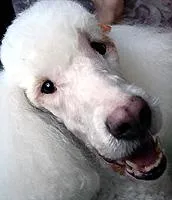
The Standard Poodle — the original, the 40–70 pound athlete — is one of the most capable dogs on earth. They served in WWII as guard dogs and messengers. They dominate agility competitions. They’re ranked #2 in working intelligence behind only the Border Collie. They don’t shed. They live 12–15 years.
And the grooming? Yes, it’s work. But it’s the price you pay for a dog that won’t coat your house in fur. For allergy sufferers who want a real dog — not a lap ornament, a real dog that can hike and swim and learn anything you teach it — the Poodle is the best option that exists.
Three Sizes, Three Personalities #
The size you pick changes everything. Too many people choose Toy because they’re cute, then wonder why they got a nervous, yappy dog.
| Size | Weight | Height | Who It’s For |
|---|---|---|---|
| Standard | 40–70 lbs | 15"+ | Athletes. Families. People who want the “real” Poodle. Most stable temperament. Needs 60+ min exercise/day. |
| Miniature | 10–15 lbs | 10–15" | The middle ground. Active but apartment-friendly. Tends to be the healthiest of the three. Good for moderately active owners. |
| Toy | 4–6 lbs | Under 10" | Adult-only homes. Lap dogs with Poodle brains. Can be anxious and vocal. Still needs daily walks — do not treat like a stuffed animal. |
Honest truth: If you’re getting a family dog, get the Standard. They’re sturdier, calmer, and more tolerant. Miniatures are great for smaller homes. Toys are for people who want a tiny, brilliant companion and understand they’re getting a fragile dog with opinions.
The Coat #
Poodles have hair, not fur — a single coat that grows continuously, like human hair. This is why they don’t shed. It’s also why grooming is non-negotiable: daily brushing, professional grooming every 4–6 weeks, and dealing with mats if you slip up. Budget $600–$1,800/year for grooming, or learn to do it yourself.
Most pet owners keep their Poodle in a short all-over clip. It’s practical, cheap, and the dog doesn’t care.
Intelligence: This Dog Is Smarter Than Your Coworker #
Poodles rank #2 in canine working intelligence. They learn commands in fewer than 5 repetitions. They figure out latches, cabinets, and manipulation strategies that would impress a toddler.
What this looks like in practice:
- Housebreaking takes 2–3 weeks. Maybe less. They get it fast.
- They’ll learn your routines — what time you wake up, when you feed them, which shoes mean “walk” — and hold you accountable.
- They’ll find loopholes in your rules. “Don’t get on the couch” becomes “I’ll put two paws on the couch.” “Stay off the bed” becomes “I’ll wait until you’re asleep.”
- They get bored. Fast. Repetitive training drills cause them to mentally check out. Keep it varied or lose their attention.
The sensitivity problem: Poodles read your emotions like a book. If you’re stressed, they’re stressed. If you yell, they shut down. Harsh corrections don’t work — positive reinforcement does. This breed needs a calm, consistent handler.
Training: Easy If You Keep It Interesting #
Poodles want to learn. They genuinely enjoy training — it’s bonding time for them. But they won’t tolerate boredom.
What works:
- Short, varied sessions. 5–10 minutes, switch activities frequently.
- High-value treats. They’re not as food-obsessed as Labs, so make it worth their while.
- Channel the retrieving instinct. Fetch is both exercise and training. They’re naturals.
- Socialization is critical. Without exposure, Poodles become shy and anxious around new people and situations.
What doesn’t work:
- Repetition. If you ask for the same command 15 times, your Poodle will conclude you’re not very bright.
- Harsh corrections. They remember. They hold grudges.
- Skipping mental stimulation. A bored Poodle will create their own work — usually destructive.
The Grooming Reality #
| Task | Frequency |
|---|---|
| Brushing | **Daily** — every other day minimum |
| Professional grooming | Every 4–6 weeks |
| Ear cleaning | Weekly (hair in ear canal traps moisture) |
| Nail trimming | Every 3–4 weeks |
| Teeth brushing | 2–3 times per week |
The biggest mistake new Poodle owners make: letting the coat go too long between brushings. Mats form fast and they hurt — they pull on the skin. If you can’t commit to daily brushing, pay your groomer to keep the coat short enough that it doesn’t matter.
Health: Size Matters #
Poodles are relatively healthy and live 12–15 years. But each size has different vulnerabilities.
| Condition | Affected Size | Notes |
|---|---|---|
| **Bloat (GDV)** | Standard | Life-threatening; deep chest risk |
| **Hip Dysplasia** | Standard, Mini | OFA screening essential |
| **Progressive Retinal Atrophy** | All sizes | Genetic; DNA test available |
| **Addison's Disease** | Standard | Hormone disorder; manageable with medication |
| **Sebaceous Adenitis** | Standard | Skin condition; genetic component |
| **Epilepsy** | All sizes | Often manageable with medication |
| **Patellar Luxation** | Toy, Mini | Slipping kneecaps |
| **Legg-Calvé-Perthes** | Toy, Mini | Hip joint degeneration |
Bloat kills Standard Poodles. Feed 2–3 smaller meals, no exercise right after eating. Know the signs: swollen abdomen, unproductive retching, restlessness. Rush to the vet — minutes matter.
Exercise: Depends Entirely on Size #
| Size | Daily Exercise |
|---|---|
| **Standard** | 60+ minutes — running, swimming, retrieving |
| **Miniature** | 30–45 minutes — brisk walks plus play |
| **Toy** | 20–30 minutes — short walks plus indoor play |
All three sizes need mental exercise equally. Puzzle toys, training sessions, scent work — a Poodle’s brain needs a daily workout or they’ll find their own entertainment.
Diet by Size #
| Size | Daily Food |
|---|---|
| Standard | 2–3 cups high-quality kibble |
| Miniature | 1–1.5 cups |
| Toy | 1/2–1 cup |
Joint supplements for Standards and Minis from age 2. Small kibble for Toys. Omega-3s for coat health across the board.
History: From German Duck Hunter to French Icon #
Poodles are German, not French. The name comes from Pudelhund — “puddle dog” — for their skill retrieving waterfowl. The breed was refined in France, becoming the national dog and earning the nickname Caniche (from canard, duck).
The Standard is the original. Miniature and Toy varieties were created by breeding down smaller Standards over generations. By the 18th century, Toy Poodles were favorites of European nobility, while Standards continued as working retrievers and military dogs.
Did you know? Poodles served in World War II as guard dogs and messenger dogs. The fancy haircut didn’t stop them from being useful in combat.
Who Should Get a Poodle? #
Get a Poodle if:
- You want an exceptionally smart, trainable dog
- You need a hypoallergenic / low-shedding breed
- You can commit to regular professional grooming (or DIY)
- You have time for daily exercise AND mental stimulation
- You live with allergy sufferers
Skip the Poodle if:
- Low-maintenance is your priority — this breed is the opposite
- You can’t afford $600–$1,800/year in grooming
- You’re away from home for long hours (they bond hard)
- You want a dog who greets every stranger like a best friend (Poodles are reserved)
Poodle vs Doodle: The Truth Nobody Wants to Hear #
Poodles are healthier and more predictable than any doodle mix. Labradoodles and Goldendoodles shed more, vary wildly in temperament, and can inherit health problems from both parent breeds — at triple the purchase price. If you want a non-shedding intelligent dog, get a Poodle. You’ll pay less and know what you’re getting.
Frequently Asked Questions #
Are Poodles really hypoallergenic? Closest thing you’ll find. No dog is 100% allergen-free (allergens are in saliva and dander, not just fur), but Poodles produce significantly less. Most allergy sufferers do well with them.
Which size is best for families? Standard — sturdier, calmer, more tolerant of children. Miniatures are a good middle ground for smaller homes. Toys are fragile; adult-only homes are better.
How much does a Poodle cost? Toy/Mini: $1,500–$3,000. Standard: $1,000–$2,500. Show-quality Standards can hit $5,000. Anything under $800 is a red flag.
Why does my Poodle stare at me? They’re reading you. Poodles are highly attuned to human emotion and body language. The staring is usually them trying to figure out what you want — or what you’re about to do next.
Similar Breeds #
- Labradoodle/Goldendoodle — more expensive, less predictable. Why a Poodle is the smarter choice →
- Portuguese Water Dog — similar coat, more stubborn, higher energy
- Bichon Frise — smaller, equally hypoallergenic, lower energy
- Barbet — rare French water dog, similar temperament, less grooming
- Lagotto Romagnolo — truffle-hunting Italian breed, similar coat
Sources #
- AKC Poodle Breed Standard — size (Toy/Miniature/Standard), weight, temperament
- OFA Breed Statistics — hip dysplasia, eye conditions, thyroid
- McMillan et al. (2024), Scientific Reports — breed lifespan data (varies by size variety)
- Puppy pricing based on 2025–2026 US breeder market data