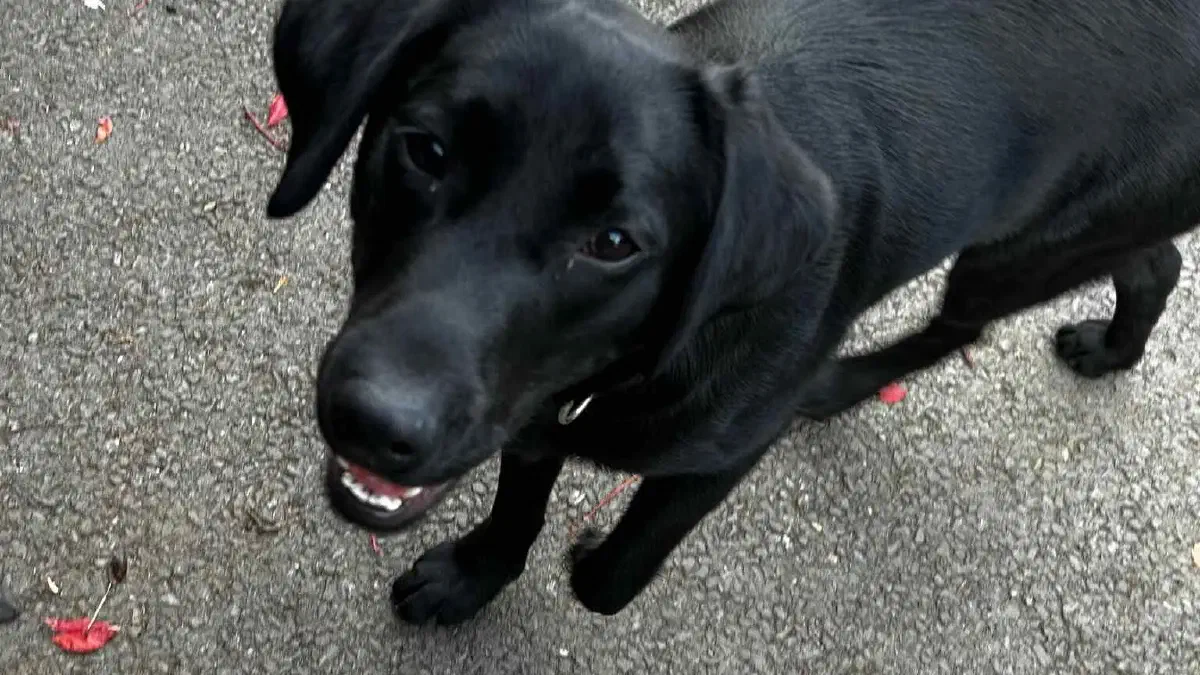

At a Glance #
Is a Lab Right for You? (Be Honest) #

If you run 5 miles a day and want a dog who’ll do it with you, then nap at your feet while you work — get a Lab. If you walk around the block once and call it exercise, or if finding dog hair in your morning coffee will ruin your day — skip the Lab. This breed needs to move, and they shed like it’s their full-time job.
Labs are often called “bombproof” — steady, resilient, nearly impossible to upset. That part’s true. What people forget to mention is that the same dog who’s unflappable around screaming toddlers is also a 75-pound athlete who will dismantle your house if he doesn’t get his daily run.
Temperament: Why People Obsess Over This Breed #
The breed standard uses the phrase “keen biddability” — a fancy way of saying Labs live to make you happy. In practice, this means:
- They follow you everywhere. Bathroom, kitchen, garage — doesn’t matter. A Lab believes you need supervision.
- Every stranger is a friend they haven’t met yet. This is terrible if you want a guard dog. It’s wonderful if you want a dog who makes everyone smile.
- Their mouth is their primary tool. Labs retrieve compulsively. Socks, shoes, the TV remote, your phone — anything within reach gets carried somewhere. Teach “drop it” before your remote disappears forever.
- They’re hungry. Always. Labs carry a mutation in the POMC gene that literally makes them feel hungrier than other breeds. This is not your imagination — your Lab actually thinks they’re starving. They’ll eat socks, rocks, drywall, and the Thanksgiving turkey you left on the counter for 30 seconds.
Kids & Other Animals #
Labs are absurdly patient with children. A toddler can grab fistfuls of fur, pull ears, and climb on them like furniture — the Lab’s response is usually a tail wag and a look that says “are we playing?” With other dogs, they’re sociable and non-confrontational. Most Labs coexist with cats without drama, especially if introduced young.
The only real risk with kids isn’t aggression — it’s enthusiasm. A happy Lab’s tail is a weapon at toddler-head-height.
Training: Almost Too Easy #
If you’ve never trained a dog before, start here. Labs are the easiest breed to train I’ve ever encountered — they’re smart, food-obsessed, and genuinely want to make you happy.
What works:
- Treats. A Lab will do backflips for a piece of kibble. Use their regular food as training rewards — they don’t need expensive treats.
- Short sessions. 5–10 minutes, multiple times a day. Their attention span isn’t the issue — yours is.
- Crate training from day one. A Lab puppy left unsupervised will destroy things. Not out of spite — out of joy.
- Impulse control work. “Leave it,” “wait,” and “stay” aren’t optional for a breed that inhales food.
Most Labs nail basic obedience in 4–8 weeks. They rank in the top 5 breeds for working intelligence and top the charts for “willingness to please.”
What doesn’t work:
- Harsh corrections. Labs are sensitive under that sturdy exterior. Yell at them and they’ll look like you broke their heart.
- Skipping socialization. A Lab needs to meet people, dogs, and new environments early. They’re friendly by default, but without exposure they can become overexcited or nervous.
The three things every Lab owner struggles with:
- Jumping up. Labs greet with their whole body. Teach “four on the floor” while they’re still small enough not to knock people over.
- Leash pulling. 75 pounds of excited Lab can drag you down the street. A front-clip harness helps more than any collar.
- Counter-surfing. The most effective solution is keeping nothing on your counters. Ever. Training helps — management works better.
Health: The Good and the Bad #
Labradors live 10–14 years — solid for a large breed. But “solid” doesn’t mean “problem-free.”
Common Health Problems #
| Condition | Prevalence | Notes |
|---|---|---|
| **Hip Dysplasia** | ~12% | Screen parents with OFA |
| **Elbow Dysplasia** | ~11% | Leading cause of front-leg lameness |
| **Obesity** | ~60% of adult Labs | The #1 health problem; shortens lifespan by 1–2 years |
| **Exercise-Induced Collapse** | Genetic carriers ~30% | DNA test available |
| **Bloat (GDV)** | Risk present | Feed 2+ smaller meals, rest after eating |
| **Progressive Retinal Atrophy** | Low | Genetic test available |
| **Ear Infections** | Common | Floppy ears trap moisture |
| **Cruciate Ligament Tears** | Moderate | Surgery often needed; $3,000–$6,000 |
The Obesity Battle Is Real #
Roughly 60% of Labrador Retrievers in the US are overweight. A 2024 study confirmed the POMC gene mutation — Labs literally feel hungrier than other dogs. Your Lab isn’t being dramatic; their brain is telling them they’re starving.
How to not let your Lab get fat:
- Measure food. Not “about 2 cups” — use a scale or a proper measuring cup, every meal.
- Slow-feeder bowls. A Lab can inhale dinner in 12 seconds. Make it take 2 minutes.
- Vegetables as treats. Carrots, green beans, cucumber slices — your Lab will eat them and they won’t add pounds.
- Weigh your Lab monthly. You should be able to feel ribs but not see them. If there’s a layer of padding, cut back.
Exercise: The Non-Negotiable #
60–90 minutes daily. Minimum. A 20-minute walk around the block doesn’t count — that’s a warmup.
What a properly exercised Lab looks like:
- Off-leash running + fetch (the ultimate Lab activity)
- Swimming — Labs are built for water and it’s zero-impact on joints
- Hiking, running, or biking alongside you
- Puzzle toys and nose work for mental exhaustion
What an under-exercised Lab looks like:
- Holes in your drywall
- Shredded couch cushions
- Everything on your counters eaten
- A dog who’s “bad” when really they’re just bored out of their mind
The Coat Situation #
Labs have a short, dense double coat that is absolutely deceptive. It looks low-maintenance. It is not.
They shed constantly — not seasonally, constantly — with two massive blowouts in spring and fall where you’ll wonder if your dog is disintegrating. The coat produces natural waterproofing oils, so don’t over-bathe (it strips them). A rubber curry brush like the Zoom Groom is your best friend — it pulls dead undercoat without damaging the topcoat.
Some people say “get a yellow Lab if you wear black clothes, a chocolate Lab if you love khaki.” The truth is: get a robot vacuum. Your clothes will have dog hair regardless.
Grooming Schedule #
| Task | Frequency |
|---|---|
| Brushing | 2–3 times per week (daily during shedding season) |
| Bathing | Every 2–3 months (or when smelly) |
| Ear cleaning | Weekly |
| Nail trimming | Every 3–4 weeks |
| Teeth brushing | 2–3 times per week |
Food: They’ll Eat Anything (Including Things That Aren’t Food) #
Adult Labs need 2–3 cups of high-quality kibble daily, split into two meals. Active Labs may need more. Free-feeding is out of the question — a Lab will eat until they vomit, then eat the vomit.
Non-negotiable rules:
- High-quality protein as the first ingredient
- Joint supplements (glucosamine/chondroitin) starting around age 1–2
- Fish oil for coat and joint health
- NO free-feeding. Measured meals at set times. Forever.
- Slow-feeder bowls or puzzle feeders to prevent inhaled meals
Dangerous foods your Lab will absolutely try to eat: chocolate, grapes, raisins, onions, garlic, macadamia nuts, xylitol, cooked bones, alcohol. Secure your trash can. A Lab can and will figure out how to open it.
Appearance: American vs English Labs #
Labs are solid, athletic dogs with broad heads, kind eyes, and the breed’s signature “otter tail” — thick at the base, tapering to a point. That tail is a powerful swimming rudder and a surprisingly effective coffee-table-clearing device.
Size:
- Males: 65–80 lbs, 22.5–24.5 inches at shoulder
- Females: 55–70 lbs, 21.5–23.5 inches
There are two distinct types, and the difference matters more than most people realize:
- American / Field Lab — Lighter, leaner, wired tighter. Bred for hunting and field trials. If you want a running partner, this is your dog. They’re more intense, more driven, and need more exercise.
- English / Show Lab — Stockier, heavier-boned, calmer. Bred for the conformation ring. If you want a family Lab who’s happy with long walks and fetch sessions, this type tends to be easier.
Most pet Labs fall somewhere in the middle. A good breeder will tell you which direction their lines lean.
History: From Fishing Boats to Family Rooms #
Labs trace back to the St. John’s Water Dog in 18th-century Newfoundland, where they worked alongside fishermen — hauling nets, retrieving escaped fish, and swimming in water cold enough to kill a human. British nobles visiting Canada saw these dogs working and brought them to England in the early 1800s.
The Earl of Malmesbury and the Duke of Buccleuch refined the breed at their estates, and “Labrador Retriever” became the official name. The Kennel Club (UK) recognized them in 1903, the AKC in 1917.
One of those weird breed-history footnotes: chocolate Labradors were considered undesirable for decades and routinely culled from litters. Today they’re among the most popular colors. Tastes change.
The Unvarnished Truth #
What’s great about Labs:
- They’re genuinely, almost pathologically friendly. Your Lab will love everyone — you, your kids, the mailman, the burglar.
- Training is easy. Like, suspiciously easy. You’ll feel like a dog-training genius.
- They’re versatile. Hunting, therapy work, service dogs, search-and-rescue — Labs excel at all of it.
- 10–14 year lifespan is solid for a large breed.
What’s hard about Labs:
- The energy. 60–90 minutes of real exercise every single day. Rain, snow, hangover, doesn’t matter.
- The shedding. You will find dog hair in places your dog has never been.
- The food obsession. You will spend your dog’s entire life managing their weight.
- The puppy phase. Labs mature slowly — expect 2–3 years of puppy brain in an adult-sized body.
- The destruction. A bored Lab is a demolition crew. Your furniture is not safe.
Frequently Asked Questions #
Labrador vs Golden Retriever — which should I get? They’re cousins, not twins. Labs are more energetic and independent — a Lab asks “what are we doing next?” Goldens are more emotionally tuned-in — a Golden asks “are you okay?” Labs cost less upfront ($800–$2,000 vs $1,500–$3,500). Both shed like crazy, both are great with kids. You can’t go wrong with either, but the energy difference is real.
Can Labs live in apartments? Only if you’re genuinely committed to 60+ minutes of daily exercise outside the apartment. A tired Lab is the best apartment dog. A bored Lab in a 700-square-foot space is a disaster. If you work 12-hour shifts, don’t do it.
Do Labs bark a lot? Not naturally. A properly exercised Lab is quiet. A bored, under-exercised Lab will bark — but that’s a you problem, not a breed problem.
How much does a Lab puppy cost? $800–$2,000 from a reputable breeder. Field/hunting lines cost slightly more, show-quality dogs can hit $3,000+. Anything under $500 is a red flag — you’re buying from a puppy mill or backyard breeder, and the health problems will cost you way more in the long run.
Are Labs hypoallergenic? God no. They shed heavily and produce significant dander. Allergy sufferers should look elsewhere.
When does a Lab calm down? Around age 3–4, give or take. Some calm down at 2, some are still acting like puppies at 5. The “puppy phase” in Labs is longer than most breeds their size.
See also: Best Family Dogs — The Complete Guide
Similar Breeds #
- Golden Retriever — slightly calmer, longer coat, even more shedding (yes, it’s possible)
- Chesapeake Bay Retriever — tougher, more protective, wavy coat, more stubborn
- Flat-Coated Retriever — the Peter Pan of retrievers, never grows up
- Curly-Coated Retriever — more independent, tightly curled coat, harder to find
- Weimaraner — similar energy, more aloof with strangers, more separation anxiety
- Labrador vs Golden Retriever — Side-by-side comparison of these two family favorites
Sources #
- AKC Labrador Retriever Breed Standard — size, weight, temperament
- Dittmann et al. (2024), Science Advances — POMC gene mutation affects ~25% of Labs
- OFA Breed Statistics — hip dysplasia (~12%), elbow dysplasia (~11%)
- McMillan et al. (2024), Scientific Reports — median lifespan data
- Puppy pricing based on 2025–2026 US breeder market data