

At a Glance #
History: From Factories to Fashion Shows #
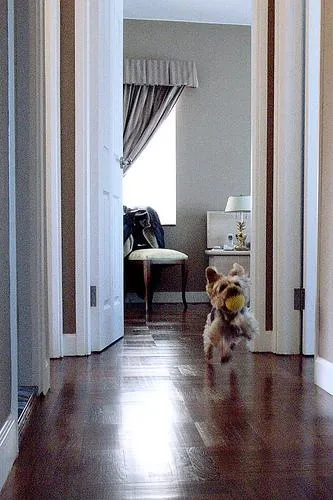
In the 1800s, Scottish workers migrating to Yorkshire brought their terriers with them — breeds like the Waterside Terrier, Clydesdale Terrier, and various rough-coated terriers. These dogs were crossed with local breeds and possibly Maltese to create a small, fearless dog that could navigate tight spaces and dispatch vermin efficiently. Nobody was thinking about dog shows. These were tools.
The breed was first shown as a “broken-haired Scotch Terrier” in 1861. By the 1870s, the name Yorkshire Terrier had stuck, largely thanks to a champion dog named Huddersfield Ben — a 12-pound dog who won over 70 prizes and is considered the foundation sire of the breed. The Kennel Club recognized the Yorkie in 1886, and the AKC followed in 1885.
What’s wild is how completely the breed transformed. Go from a coal mine to a Paris Hilton handbag in under a century. The Yorkie’s silky coat and portable size made it a favorite of Victorian ladies, and the breed never looked back at its working-class roots.
Temperament: 7 Pounds of Audacity #
A Yorkie doesn’t know it’s small. That’s the whole point of the breed. They’ll challenge a German Shepherd, bark at delivery trucks, and guard their home with the conviction of a dog ten times their size. It’s simultaneously their most endearing and most problematic trait.
What this looks like in practice:
- They bond intensely — usually to one person. This can tip into possessiveness and jealousy if not managed.
- They’re vocal. Yorkies bark at everything: strangers, other dogs, leaves, the doorbell on TV. If you live in an apartment with thin walls, this matters.
- They have genuine terrier tenacity. That silky coat hides a working terrier brain — they’re stubborn, prey-driven, and will chase small animals relentlessly.
- They’re affectionate but not pushovers. A Yorkie wants to be with you, but on their terms.
With Kids and Other Animals #
Yorkies are fragile. A fall from a couch can break a bone. A clumsy toddler can injure one accidentally. This is not a dog for homes with children under 8 — not because of aggression, but because of physics. A 5-pound dog and a 30-pound child don’t mix safely.
With other dogs: it depends entirely on socialization. Well-socialized Yorkies do fine. Poorly socialized Yorkies will start fights with dogs 20 times their size and lose badly. Cats are usually fine once the Yorkie establishes that it’s in charge.
Health: The Small Dog Tradeoffs #
Yorkies live 11–15 years, which is solid for a toy breed. But small dogs have their own set of health problems, and the Yorkie is no exception.
| Condition | How Common | What To Know |
|---|---|---|
| Patellar Luxation | Common | Kneecap slips out of place; ranges from mild to needing surgery |
| Dental Disease | Very common | Tiny mouths crowd teeth; daily brushing is non-negotiable |
| Collapsing Trachea | Moderate | Use a harness, never a collar — always |
| Portosystemic Shunt | Moderate | Liver doesn't filter blood properly; surgery often needed |
| Hypoglycemia | Common in puppies | Frequent small meals; keep sugar source on hand |
| Legg-Calvé-Perthes | Uncommon | Hip joint deterioration; usually appears in puppies |
| Eye Problems | Moderate | Cataracts, progressive retinal atrophy |
Bottom line on health: Dental care is the single biggest daily health commitment. Yorkies’ small mouths mean teeth crowd and decay fast. If you won’t brush teeth daily, this breed will rack up expensive dental cleanings and extractions. Always use a harness — collar pressure on a collapsing trachea is a medical emergency.
Exercise & Training: Surprisingly Capable #
Yorkies need about 30 minutes of exercise daily. A couple of short walks and some indoor play will do it. They’re not couch potatoes — they have real terrier energy — but their small size means a little goes a long way.
What they love:
- Short walks with lots of sniffing (they’re terriers — scent work is built in)
- Interactive toys and puzzle feeders
- Learning tricks — they’re smarter than people give them credit for
A bored Yorkie barks. A tired Yorkie sleeps. Pick one.
Training #
This is where the terrier brain shows up. Yorkies are intelligent enough to learn anything, but they’re independent enough to decide whether they want to. Positive reinforcement works. Harsh corrections make them shut down or get defensive.
What works:
- Short sessions with high-value treats. Yorkies are food-motivated but have tiny stomachs.
- Early socialization. Critical. A Yorkie that doesn’t meet people and dogs as a puppy becomes a reactive, barky adult.
- Consistency. If you let them on the couch once, it’s their couch forever.
- Crate training. Helps with housebreaking (Yorkies are notoriously hard to housetrain) and prevents separation anxiety.
What doesn’t work:
- Punishment. They’ll hold a grudge. Terrier memory is long.
- Expecting instant obedience. These are not Labs. They need a reason to comply.
Grooming: The Coat Is a Commitment #
That gorgeous silky coat is the breed’s defining feature, and it’s also your biggest time investment. Yorkies have hair, not fur — it grows continuously like human hair and doesn’t shed much. Great for allergies. Not great for your schedule.
| Task | How Often |
|---|---|
| Brushing | Daily (long coat) or 2–3x/week (puppy cut) |
| Bathing | Every 1–2 weeks |
| Professional grooming | Every 4–6 weeks |
| Teeth brushing | Daily |
| Ear cleaning | Weekly |
| Nail trimming | Every 2–3 weeks |
Most pet owners keep their Yorkie in a “puppy cut” — a short, even trim that’s dramatically easier to maintain than the show-length floor-sweeper coat. If you want the long show coat, budget for daily brushing (30+ minutes) or hire a professional groomer. There’s no middle ground.
Diet: Small Dog, Big Appetite Problems #
Yorkies need ½ to ¾ cup of high-quality kibble per day, split into two or three meals. Toy breeds are prone to hypoglycemia, so puppies especially need frequent small meals — every 3–4 hours until about 6 months old.
Non-negotiables:
- High-quality small-breed formula (smaller kibble size for tiny mouths)
- Measured portions — Yorkies gain weight fast and obesity is devastating on tiny joints
- No free-feeding — it makes housetraining impossible
- A sugar source (honey or corn syrup) on hand for hypoglycemic episodes in puppies
Foods They’ll Try to Eat (Don’t Let Them) #
| Never Feed | Why |
|---|---|
| Chocolate, grapes, raisins | Toxic — tiny body means even small amounts are dangerous |
| Onions, garlic | Damages red blood cells |
| Xylitol (sugar-free gum) | Causes rapid blood sugar drop — even more dangerous in toy breeds |
| Macadamia nuts | Causes weakness, vomiting |
| Cooked bones | Splinter and can perforate intestines |
Who Should Get a Yorkshire Terrier? #
Get a Yorkie if:
- You want a portable, apartment-friendly dog with real personality
- You’re home often — they bond hard and don’t do well alone for long stretches
- You can commit to daily dental care and regular grooming
- You want a hypoallergenic breed that doesn’t shed much
- You appreciate a bold, confident small dog — not a delicate ornament
- You don’t have small children (fragility risk)
Skip the Yorkie if:
- You want a quiet dog — they bark. A lot.
- You can’t commit to daily brushing or regular professional grooming
- You have toddlers or very young children
- You’re away from home 8+ hours daily (separation anxiety and housetraining issues)
- You want a dog that’s easy to housetrain — Yorkies are notoriously difficult
- You have a low tolerance for stubbornness
The Quick Summary #
What’s incredible about Yorkies:
- They’re hypoallergenic and barely shed — one of the best toy breeds for allergy sufferers
- They’re fearless and full of personality in a 5-pound package
- Long lifespan (11–15 years) with relatively few serious health problems
- Portable, adaptable, and perfect for apartment living
- Surprisingly capable — they were working dogs and still have that drive
What’s hard about Yorkies:
- The barking. It’s constant and difficult to train out completely.
- Housetraining is genuinely one of the hardest among all breeds
- Dental disease is almost guaranteed without daily brushing
- They’re fragile — breaks, hypoglycemia, tracheal collapse
- Grooming is a real time and financial commitment
- They can be possessive, snappy with strangers, and aggressive with other dogs if poorly socialized
Frequently Asked Questions #
Are Yorkshire Terriers hypoallergenic?
Are Yorkies hard to housetrain?
Do Yorkies get along with other dogs?
How much does a Yorkshire Terrier puppy cost?
Can Yorkies be left alone during a workday?
What's the difference between a Yorkie and a teacup Yorkie?
Similar Breeds #
If you love Yorkshire Terriers, also check out:
| Breed | Compared to a Yorkie |
|---|---|
| Chihuahua | Even smaller, more attitude, less grooming |
| Pomeranian | Fluffier, bolder, similar confidence level |
| Maltese | Gentler temperament, white only, less terrier drive |
| Silky Terrier | Australian cousin, slightly larger, very similar look |
| Affenpinscher | Similar size, monkey-faced, equally fearless |
Sources #
- AKC Yorkshire Terrier Breed Standard — size, weight, temperament
- McMillan et al. (2024), Scientific Reports — small-breed lifespan data
- Puppy pricing based on 2025–2026 US breeder market data