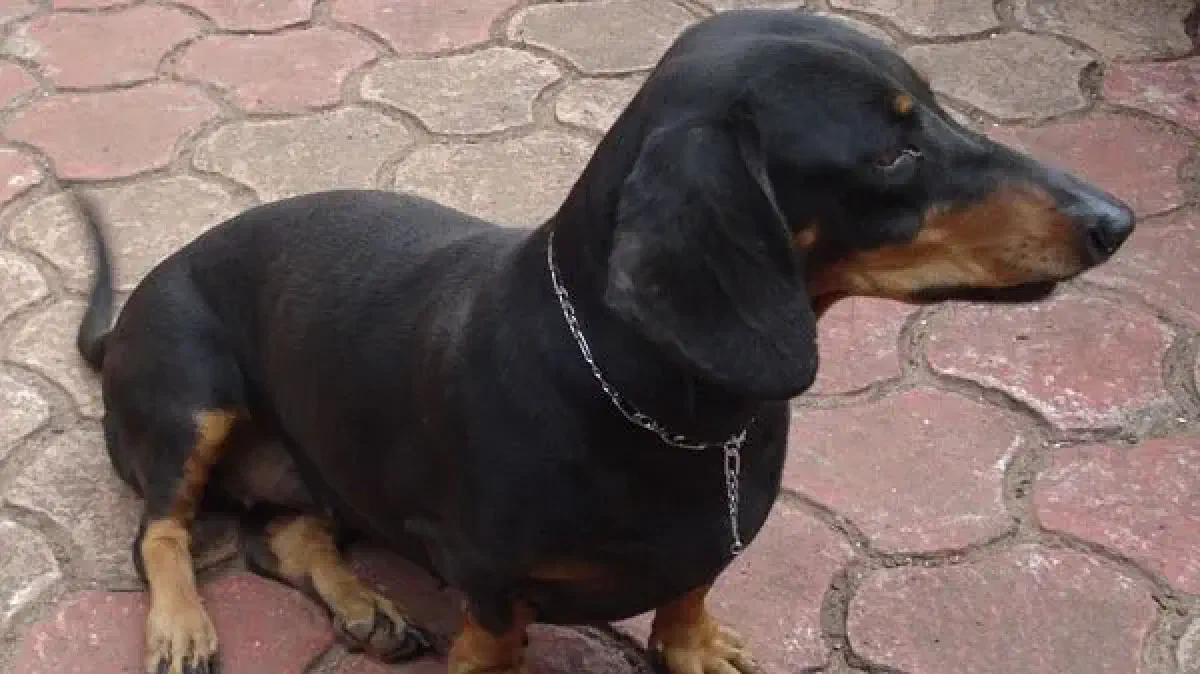

At a Glance #
History: The Badger Dog #
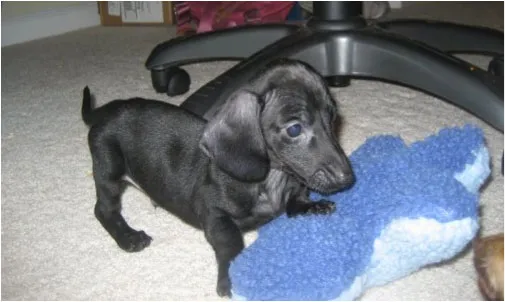
The Dachshund’s origins trace back to 15th-century Germany, though the breed as we know it was refined in the 1600s and 1700s. The name is literal: Dachs (badger) + Hund (dog). These dogs were engineered for a very specific, very brutal job — following badgers into their setts, fighting them underground, and dragging them out.
Every physical feature had a purpose. The long, low body fit into tight tunnels. The paddle-shaped paws were efficient digging tools. The loose skin prevented injury from badger bites and claws. The loud, carrying bark let hunters locate the dog underground. The floppy ears kept dirt out of the ear canal while tunneling. Even the tail — slightly curved and carried high — served as a flag visible from the entrance of a burrow.
Two sizes existed: Standard for badgers and larger game, Miniature for rabbits and foxes. The Kaninchen (rabbit) Dachshund, still recognized in Europe, is even smaller. Three coat varieties developed for different terrain: smooth-coated for general work, wirehaired for thorny underbrush (with a terrier cross to add toughness), and longhaired for cold climates.
The Dachshund became Germany’s most popular dog. Goethe owned one. The breed appeared in art, literature, and even political cartoons. During World War I, anti-German sentiment in America nearly killed the breed’s popularity — they were rebranded as “liberty hounds” briefly, like Dachshunds renamed themselves. It didn’t stick.
The AKC recognized the breed in 1885. Today, Dachshunds consistently rank in the top 10 most popular breeds in America.
Did you know? A Dachshund named Waldi was the first official Olympic mascot, created for the 1972 Munich Games. The organizers chose the breed specifically for its determination and agility.
Temperament: Fearless, Stubborn, and Yours #
Dachshunds are not lap dogs. They’re not handbag accessories. They’re tenacious, fearless, independent hunters who happen to look ridiculous. Treat them accordingly.
What defines a Dachshund’s personality:
- Fearless to the point of recklessness. A Dachshund will challenge a Great Dane, a German Shepherd, or a moving car without a second thought. They don’t understand their size, or more accurately, they don’t care. This gets them into trouble regularly.
- Independently minded. They were bred to work alone underground, making decisions without human direction. “Come” is always negotiable. “Stay” is a suggestion. They understand what you want — they’re weighing whether it’s worth doing.
- One-person dogs. Dachshunds bond intensely with their chosen human and tolerate everyone else. Some are affectionate with the whole family, but most have a clear favorite. If you’re not that person, you’ll know.
- Born alarm systems. They were bred to bark underground so hunters could find them. That instinct is alive and well. Dachshunds bark at strangers, noises, other dogs, the wind, and nothing at all. They’re among the most vocal small breeds.
- Burrowers. Under blankets, in laundry piles, between couch cushions — Dachshunds are happiest in enclosed spaces. Provide a den-like bed or expect them to make their own under your covers.
With Children and Other Dogs #
Dachshunds are not great with small children. Their long back is easily injured by rough handling, dropping, or being picked up incorrectly. They’re also quick to snap when hurt or cornered — a Dachshund doesn’t endure pain silently. Older, gentle children who understand how to handle a small dog are the right match.
With other dogs: variable. Some Dachshunds live happily with other dogs, especially if raised together. Others are dog-aggressive, particularly with dogs they don’t know. Same-sex aggression is common. They tend to be braver (and more obnoxious) with larger dogs, which can provoke dangerous responses.
Health: Protect the Back Above All Else #
Dachshunds live 12–16 years — a long life for a dog their size. But that beautiful long spine on short legs is a ticking clock. Back disease is the defining health concern, and every Dachshund owner needs to understand it.
Common Health Problems #
| Condition | Prevalence | Notes |
|---|---|---|
| **IVDD (Intervertebral Disc Disease)** | ~25% (1 in 4) | THE breed health crisis. Surgery $3,000–$8,000. Time-critical. |
| **Obesity** | Very common | Extra weight dramatically increases IVDD risk. |
| **Dental Disease** | High (small mouths) | Crowded teeth; regular dental care essential. |
| **Progressive Retinal Atrophy** | Genetic risk | Progressive blindness; DNA test available. |
| **Cushing's Disease** | Breed predisposition | Overproduction of cortisol; manageable with medication. |
| **Hip Dysplasia** | Lower than large breeds | Still present; OFA screening recommended for breeding dogs. |
| **Deafness (Double Dapple)** | High in double dapples | Avoid double-dapple breeding — causes deafness and blindness. |
IVDD — the critical issue:
- 1 in 4 Dachshunds will experience IVDD in their lifetime. The discs in their spine degenerate and can rupture, pressing on the spinal cord.
- Signs: hind-leg weakness, dragging paws, reluctance to move, crying when picked up, hunched posture, loss of bladder control.
- This is an emergency. If you see these signs, get to a vet immediately. Surgery within 24–48 hours dramatically improves outcomes. Delay reduces the chance of recovery.
- Surgery costs $3,000–$8,000. Some dogs need multiple surgeries over their lifetime.
The five rules every Dachshund owner must follow:
- Keep them lean. Every extra pound stresses the spine.
- No jumping off furniture. Ramps everywhere — bed, couch, car. No exceptions.
- Minimize stairs. Carry them when practical.
- Support the entire body when picking up — one hand under chest, one under rear. Always.
- No rough play that twists or jars the spine.
Grooming: Depends on the Coat #
Dachshunds come in three coat varieties, each with different grooming needs.
| Task | How Often |
|---|---|
| Brushing (smooth coat) | Weekly with a soft bristle brush |
| Brushing (longhaired) | Every other day — tangles form easily |
| Brushing (wirehaired) | 2–3 times per week + hand-stripping twice a year |
| Bathing | Every 4–6 weeks |
| Ear cleaning | Weekly (floppy ears trap moisture) |
| Nail trimming | Every 3–4 weeks |
| Teeth brushing | Daily if possible (small mouths = crowded teeth) |
Smooth-coated Dachshunds are the lowest maintenance — a quick weekly brush keeps them looking good. Longhaired Dachshunds need regular attention to prevent mats, especially behind the ears and along the chest. Wirehaired Dachshunds have a distinctive rough coat that needs professional hand-stripping twice a year to maintain texture; clipping softens it. All three varieties are low-shedding compared to many breeds.
Exercise & Training: Patience Required #
Dachshunds need 30–45 minutes of daily exercise. Two walks plus some sniffing time is the baseline. They’re not high-energy dogs, but they’re not couch potatoes either — they were bred to work all day in the field.
What they love:
- Walks with lots of sniffing time — let them follow their nose
- Scent work and nose games — hide treats around the house and let them hunt
- Digging (provide a designated sandbox if you want to save your garden)
- Short bursts of play — they’re sprinters, not marathon runners
The training challenge: Dachshunds are intelligent but stubborn — a combination that makes training genuinely difficult. They understand commands quickly. They just don’t see why they should comply. This isn’t defiance for its own sake — it’s independence bred over centuries of working alone underground.
What works:
- Positive reinforcement only. Food motivation is your best friend. Dachshunds will do almost anything for a treat.
- Keep sessions short (5–10 minutes). They get bored and shut down.
- Be more stubborn than they are. Consistency wins, but it takes months, not weeks.
- Start early and never stop. Training a Dachshund is a lifelong activity.
Housebreaking: the elephant in the room. Dachshunds are one of the hardest breeds to potty train. Expect 4–8 months of consistent effort. Crate training is essential — not punishment, but structure. Many Dachshund owners use indoor potty pads as a backup, especially in apartments or during bad weather. Some never achieve 100% reliability. This is normal for the breed.
Diet: Small Dog, Big Appetite #
Adult Dachshunds need ½–1½ cups of high-quality kibble daily, depending on size (Mini vs. Standard) and activity level. Split into two meals.
Key dietary needs:
- High-quality protein as the first ingredient
- Portion control is critical — Dachshunds gain weight easily, and every extra pound stresses their spine
- Measured meals, no free-feeding
- Treats should be tiny and accounted for in daily calories
- Joint supplements (glucosamine, chondroitin) are a smart preventive, even in young dogs
Foods to never feed: Chocolate, grapes, raisins, onions, garlic, xylitol (sugar-free gum), macadamia nuts, cooked bones. Dachshunds are resourceful scavengers — keep counters clean and trash secured.
Who Should Get a Dachshund #
Get a Dachshund if you want a portable, devoted companion with an outsized personality. You don’t mind barking — and you mean it, because they bark a lot. You can commit to back protection: ramps, weight management, no jumping, proper handling. You find stubbornness charming rather than frustrating. You have older children who understand how to handle a small dog. You’re patient enough to spend 4–8 months on housebreaking.
Skip the Dachshund if you have toddlers or small children — the back injury risk and the breed’s quick temper are a bad combination. If you want a dog who obeys instantly. If you need reliable housebreaking within the first few months. If barking drives you crazy. If you can’t commit to the lifestyle changes that protect their spine — ramps, no jumping, no stairs. If you want a dog who loves everyone equally.
Cost: $800–$2,000 from a reputable breeder. Dapple and rare colors cost more but come with higher health risks — double-dapple breeding produces dogs that can be born deaf, blind, or both. Avoid breeders who prioritize color over health.
The Quick Summary #
What’s incredible about Dachshunds:
- Devoted to their person — the loyalty is intense and genuine
- Big personality in a small package — brave, funny, endlessly entertaining
- Long lifespan (12–16 years) compared to larger breeds
- Low-shedding, relatively low-maintenance grooming (smooth coat variety)
- Excellent watchdogs — nothing gets past them without an announcement
What’s hard about Dachshunds:
- IVDD is terrifying — 1 in 4 affected, and it’s a lifestyle-altering (and expensive) condition
- Stubbornness makes training a genuine challenge, not just a quirk
- Housebreaking can take 4–8 months and some never fully master it
- They bark. A lot. If barking bothers you, this breed will test you daily.
- Not suitable for homes with small children due to back fragility and quick temper
- Dog-selective and sometimes dog-aggressive, especially with unfamiliar dogs
Frequently Asked Questions #
Why is my Dachshund so hard to potty train?
Can Dachshunds do stairs?
How much does a Dachshund puppy cost?
Are Dachshunds good apartment dogs?
How do I prevent IVDD in my Dachshund?
Do Dachshunds get along with other dogs?
What's the difference between smooth, longhaired, and wirehaired Dachshunds?
Similar Breeds #
If you love Dachshunds, also check out:
| Breed | Compared to a Dachshund |
|---|---|
| Basset Hound | Larger, lazier, similar stubbornness and long-back concerns |
| Pembroke Welsh Corgi | Similar long-back structure, more herding energy, easier to train |
| Beagle | Similar nose-driven personality, larger, more pack-oriented |
| Jack Russell Terrier | Similar size and tenacity, much higher energy, equally stubborn |
| Miniature Pinscher | Similar size, sleek look, more energetic, less stubborn |
- Corgi vs Dachshund — Long body, short legs — totally different personalities
Sources #
- AKC Dachshund Breed Standard — size, weight, coat varieties
- Dachshund Health UK — IVDD affects ~25% (1 in 4) lifetime prevalence
- Ball et al. (1982), JAVMA — disc disease patterns in Dachshunds
- McMillan et al. (2024), Scientific Reports — Miniature Dachshund median lifespan 14.0 years
- Puppy pricing based on 2025–2026 US breeder market data